
[A.I.R. + BATURU]
Feminist Art Digital Program
November 2020 - May 2021
A.I.R. is thrilled to announce a new line of collaboration with BATURU—a Chinese organization based in Beijing—to create a digital platform where artists, activists, and art students from both cultures, the US and China, can come together to have a vibrant exchange of ideas and experience about feminism and art. In light of the turbulent political climate and the new reality of social isolation, we hope to build a space of solidarity and community, where audiences from both cultures can exchange an open and inclusive conversation that transcends the limits of geographical and political borders.
The program consists of a series of online lectures, workshops, and panels led by A.I.R. artists—Aliza Shvarts, Maxine Henryson, Susan Bee, and Aya Rodriguez-Izumi, who demonstrate exceptional achievement in the arts and the highest level of artistic practice in feminist theory, among many others.
The Digital Classes will be carried out through four themes:
Feminism beyond the body (Lecturer: Aliza Shvarts);
Expressions of Contemporary Feminist Artists and their Processes (Organizer: Maxine Henryson);
Collaboration as a feminist mode of working (Organizer: Susan Bee);
Activating the archive: rewriting history through a feminist lens (Organizer: Aya Rodriguez-Izumi).
This program is open to the public for free. We welcome all women artists, art students, and feminist activists from the Asia Pacific Regions to join this event.

Fully funded by the award:
‘Gift of the United States Government’
Past Series
Aya Rodriguez-Izumi, Activating the Archive: Rewriting history through a feminist lens
May 17 - June 14, 2021, Every Monday 9 AM EST
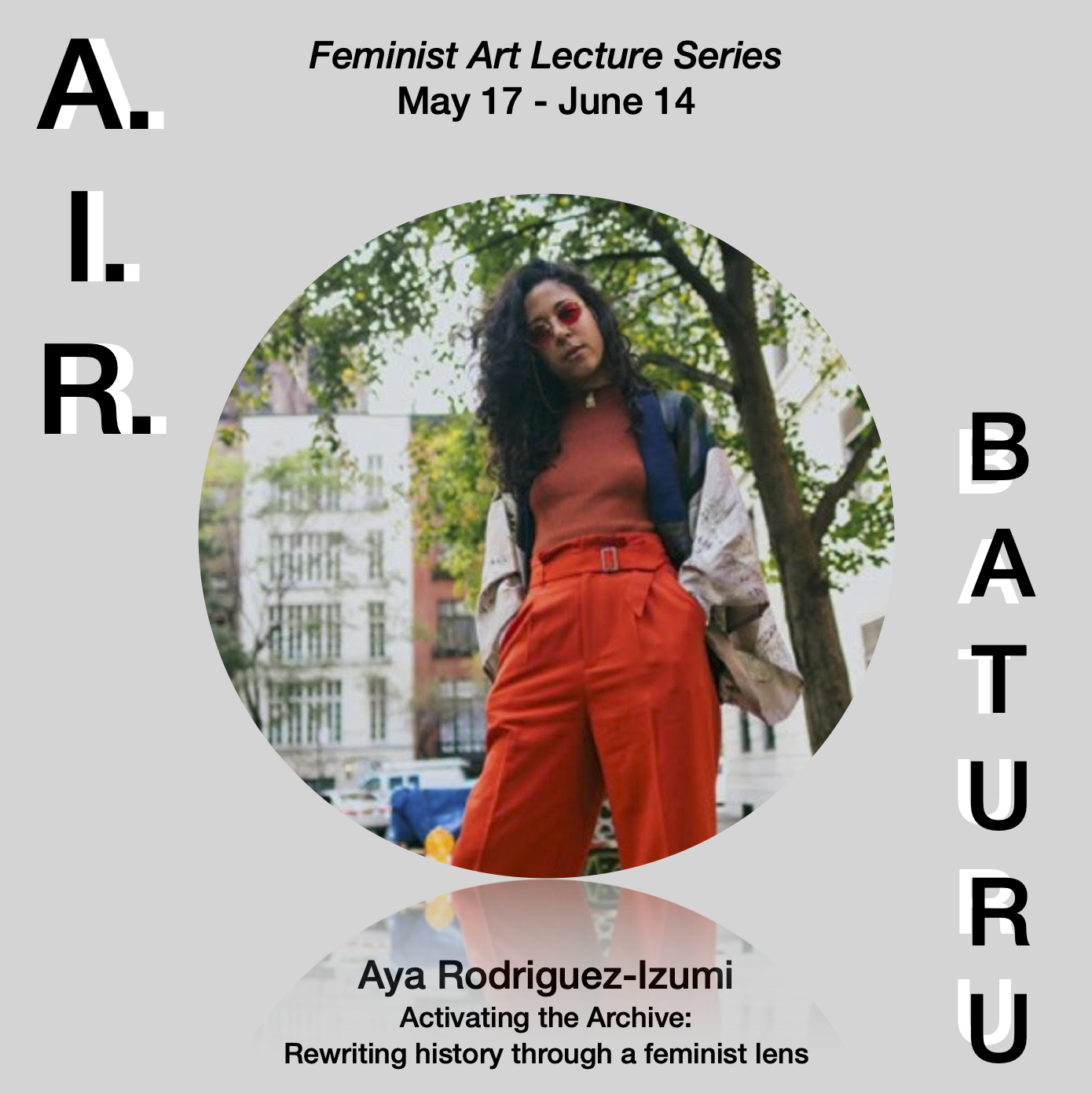
Aya Rodriguez-Izumi, Artist Portrait.
In the series “Activating the Archive” we will hear from artists who explore the history, identity, and community by utilizing documentation and archives as both a medium and practice. We will explore how history can be preserved, shared, and remembered. We will examine who’s perspectives and narratives are passed down, and ways a practice can work towards preserving and championing histories at risk of erasure, while simultaneously recording, creating, and translating their contemporary relationships through a global and feminist lens.
May 17, Session 1: Lizana Cruz
May 24, Session 2: Ariko Ikehara
May 31, Session 3: Stephanie Diamond
Aliza Shvarts, Feminism Beyond the Body
November 23 - December 21, 2020
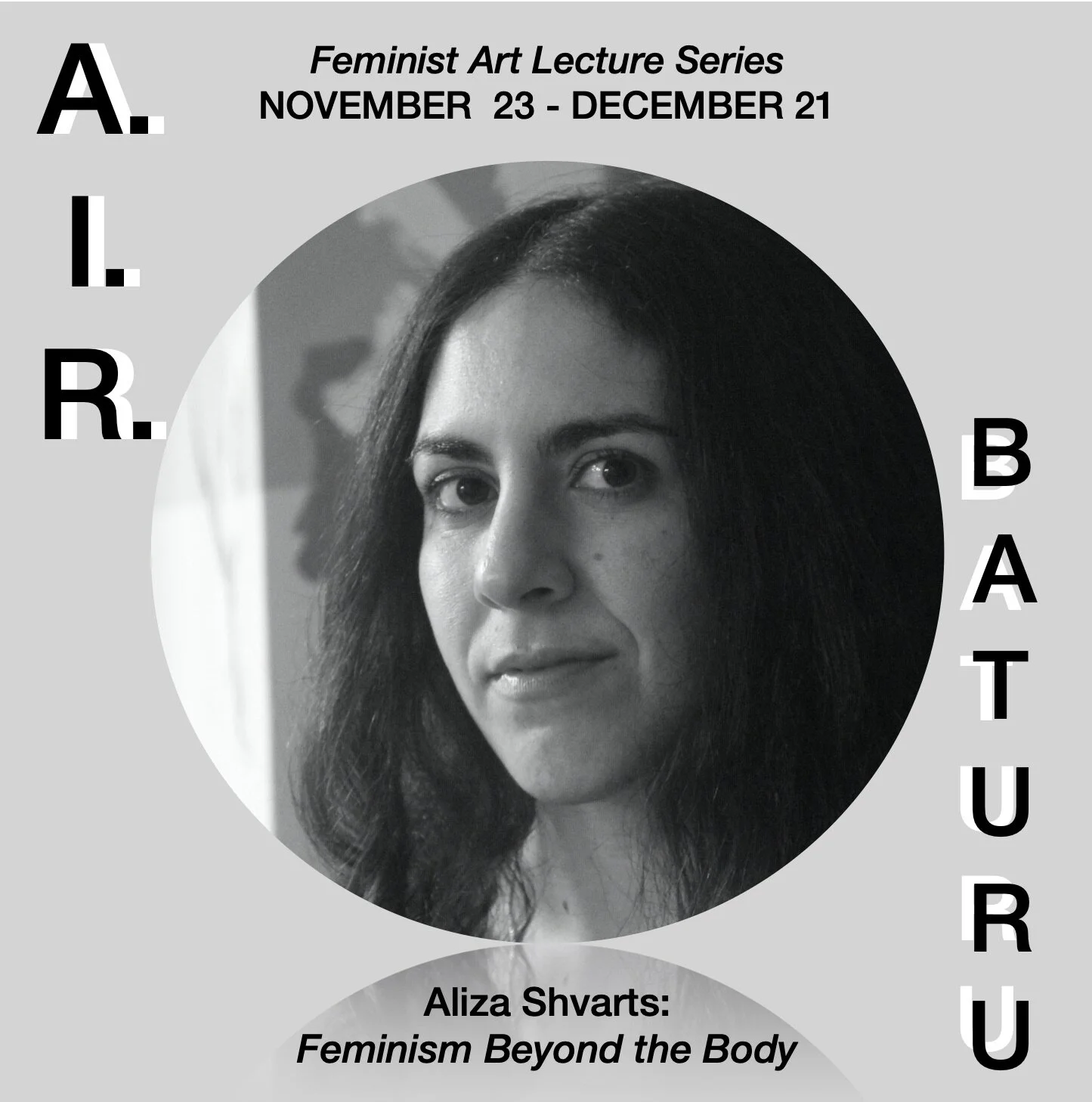
Aliza Shvarts, Artist Portrait.
The politics of Western feminism have long been rooted in the body—that is, experiences of moving through the world in a form that’s read as “female” or is otherwise structured by the language and ideology of gender difference. Throughout the 20th and 21st century, many US-based feminist artists have explored this relationship between gender, language, and the body as they manifest in questions of reproduction, consent, dissent, and care. This 5-part seminar series will explore the relationship between feminism, performance, politics, and other forms of embodied practice. Together, we will discuss the theoretical, convivial, and community-centered frameworks that underlie this way of working; the intersectional politics necessarily structure and inform this approach; and the future of feminist art in our increasingly digital lives.
November 23, 2020, Session 1: Performing Gender
(video available)
November 30, 2020, Session 2: Intersectional Feminism
(video available)
December 7, 2020, Session 3: Reproducing Community
(video available)
December 14, 2020, Session 4: Consent and Dissent
(video available)
December 21, 2020 Session 5: Digital Feminism
(video available)
Susan Bee, Collaboration and Feminism
January 18 - February 15, 2021
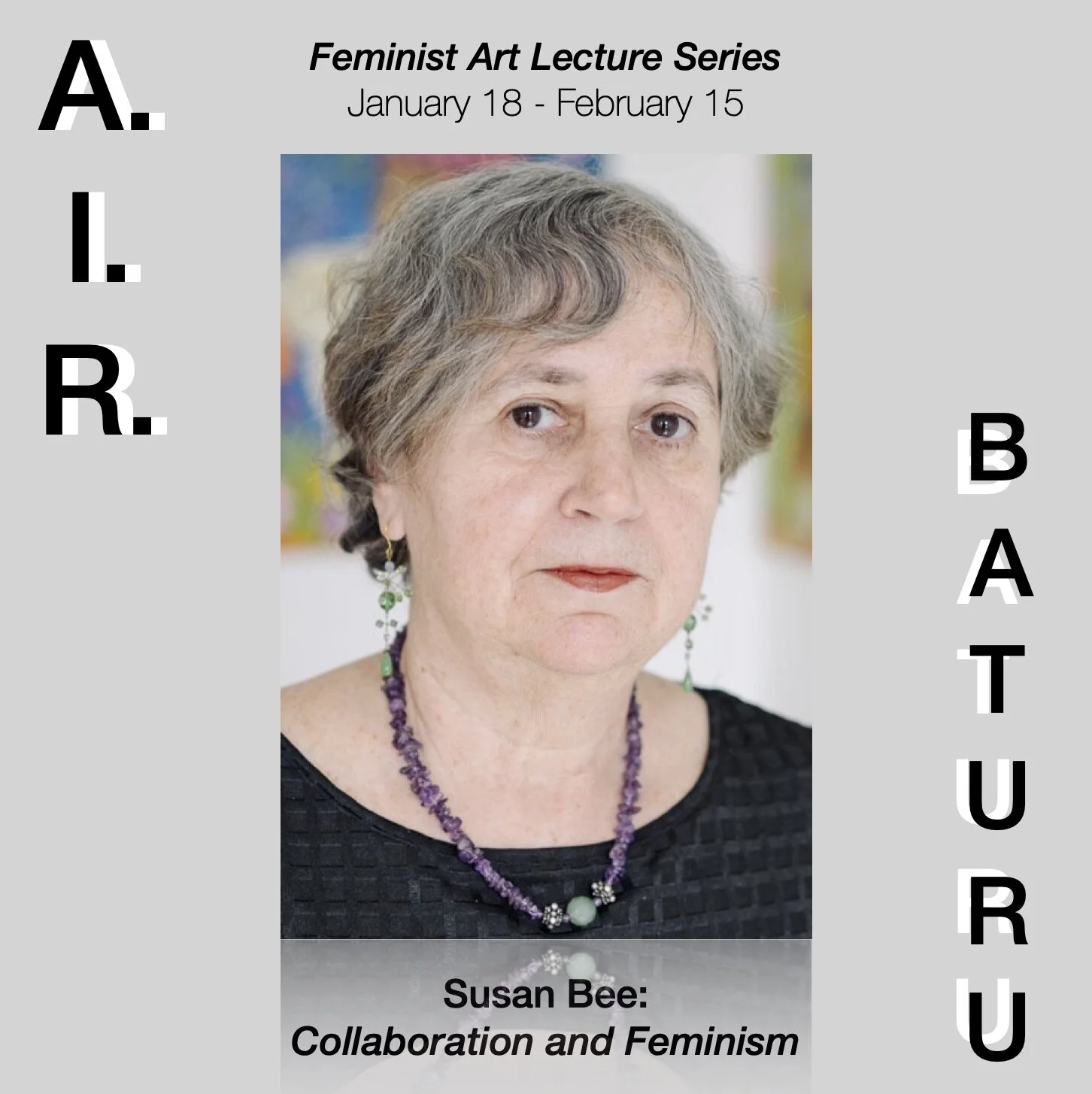
Susan Bee, Artist Portrait.
Collaboration has always been an important aspect of feminist work. A.I.R. Gallery presents an important example of the cooperative structure as a women’s space that allows experimentation and also shows women’s artwork in a nurturing and supportive setting. In this series of seminars, we will examine the role of collaboration in the work of various artists, poets, critics, and writers, who have been engaged with collaborative practices for many years.
January 18, 2021, Session 1: Johanna Drucker: Visual Poetics—A Feminist Approach (video available)
January 25, 2021, Session 2: Charles Bernstein on Collaborations between Poets and Artists (video available)
February 1, 2021, Session 3: Susan Bee on Collaboration and Feminism (video available)
February 8, 2021, Session 4: Mira Schor on Feminism and Collaboration including M/E/A/N/I/N/G magazine (1986-2016) (video available)
Maxine Henryson, Expressions of Contemporary Feminist Artists and their Processes
March 1 - May 3, 2021, Every Monday 8 AM EST
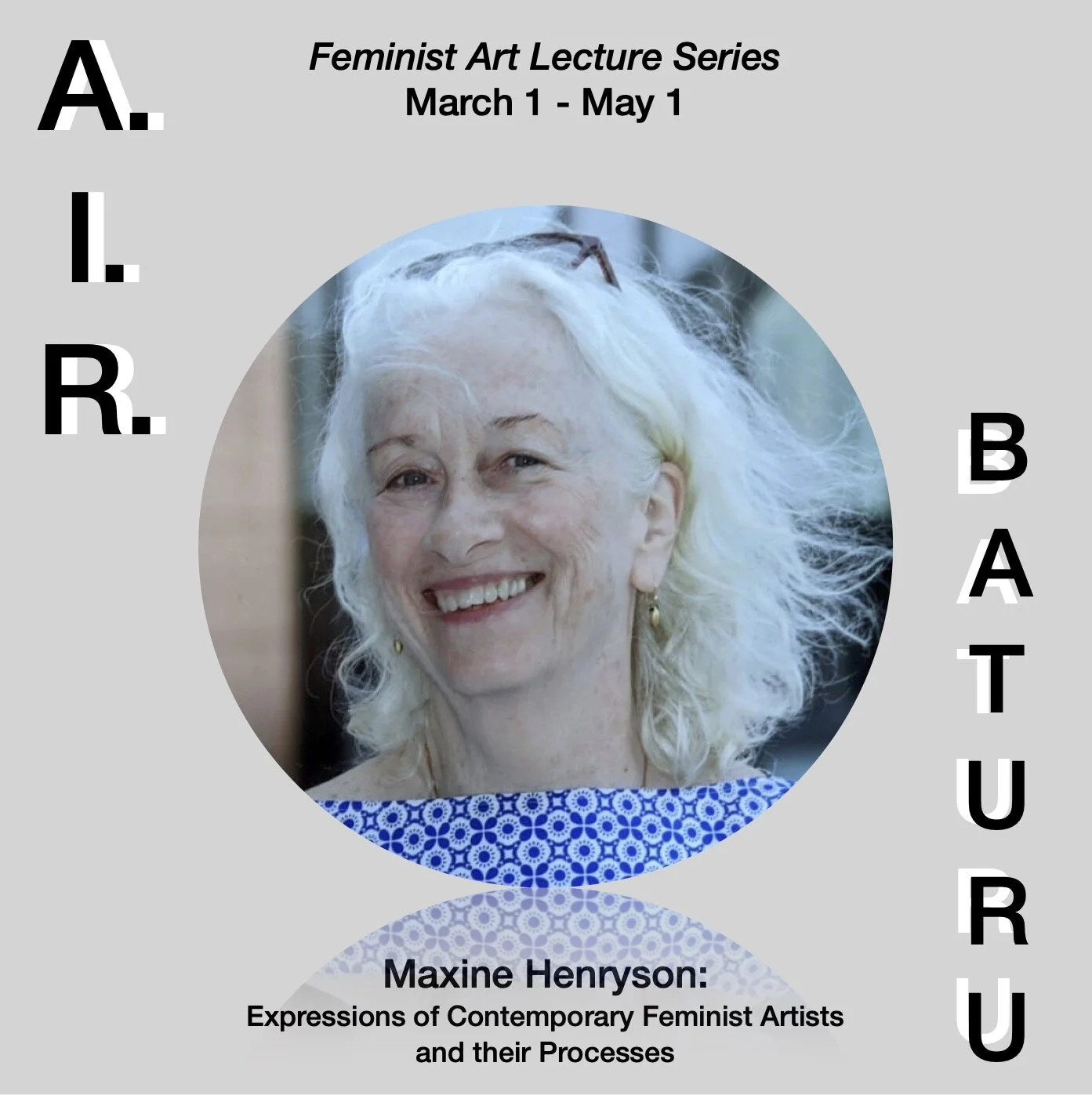
Maxine Henryson, Artist Portrait.
Lucy R. Lippard argued in 1980 that feminist art was "neither a style nor a movement but instead a value system, a revolutionary strategy, a way of life." This series of lectures by eleven women and non-binary artists from the A.I.R. Gallery collective encompasses four general areas of contemporary feminist artistic practice: memory and imagination, social practice and narrative, material qualities and experimentation and our bodies. Artists working with memory and the imagination tap their unconscious for spontaneous responses to a situation or medium. They work freely from an unpreconceived space where the process is given priority. Interiority plays a part in the artist’s response to place, space, the environment or everyday experience. Those doing social practice and creating narratives are interacting with others with a specific intent of either revealing a social construct or telling an imagined or real story through performance, installation or documentary processes. The artists exploring material qualities and experimentation concentrate on the actual materials and what they can reveal while simultaneously questioning the formal qualities of specific mediums. Often these artists use humor and play or the opposite, they ask a series of conceptual questions. Many of the artists question the role of the female and non-binary body in art history and contemporary social media.
March 8, Session 2: Soma and Jinx - Maxine Henryson & Jane Swavely
March 15 Session 3: The Book as Primary Form - Lauren Simkin Berke
March 22, Session 4: Interactive Art and Collective Change - Susan Stainman
March 29, Session 5: Displacement/Anything Helps - Rosina Lardieri
April 5, Session 6: From the Female Body as Possession to Beauty as Power - Daria Dorosh
April 12, Session 7: Material Qualities + Experimentation - Tomoko Abe + Erica Stoller
April 19, Session 8: Seeking Beauty in Chance - Joan Snitzer