
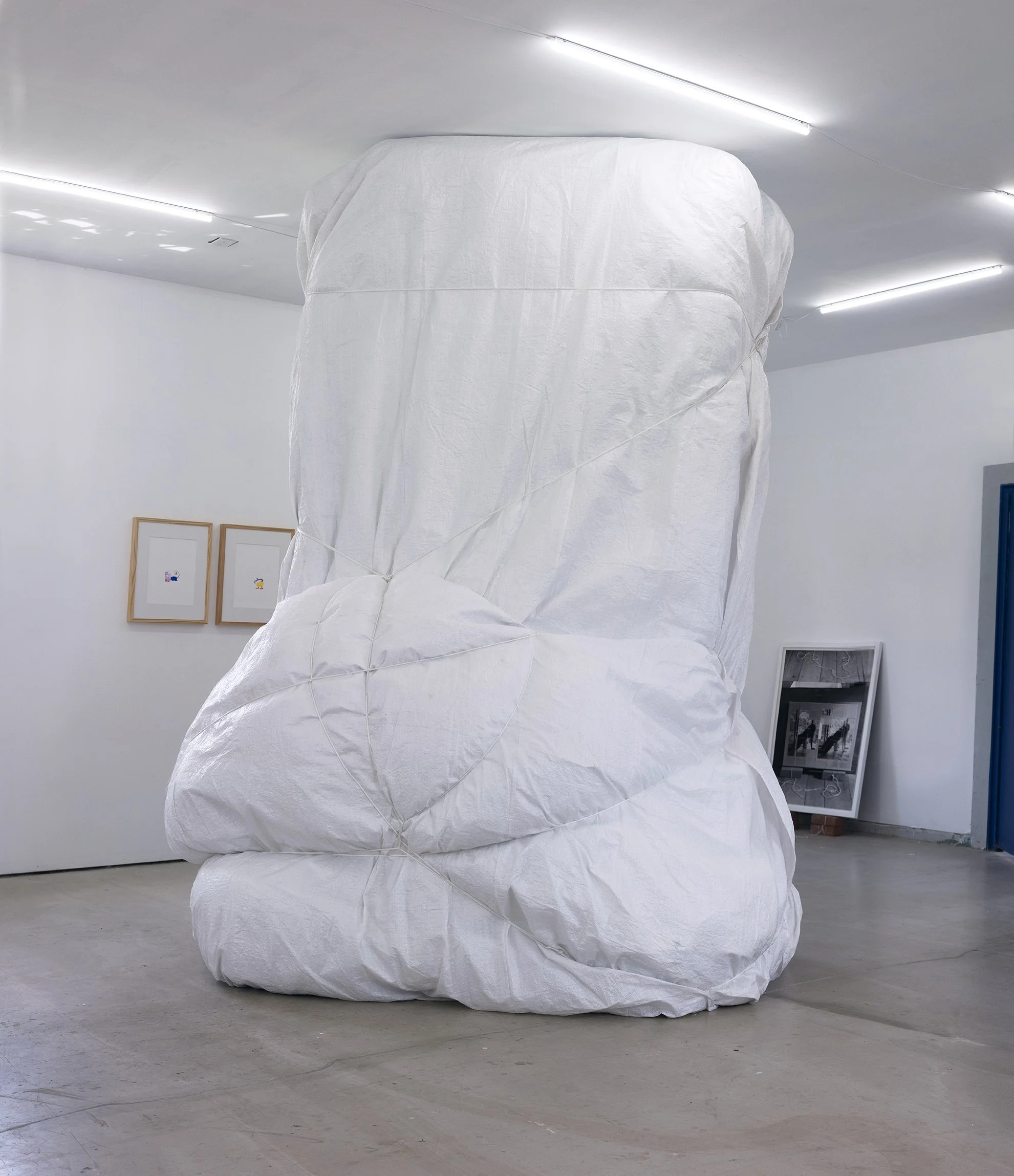
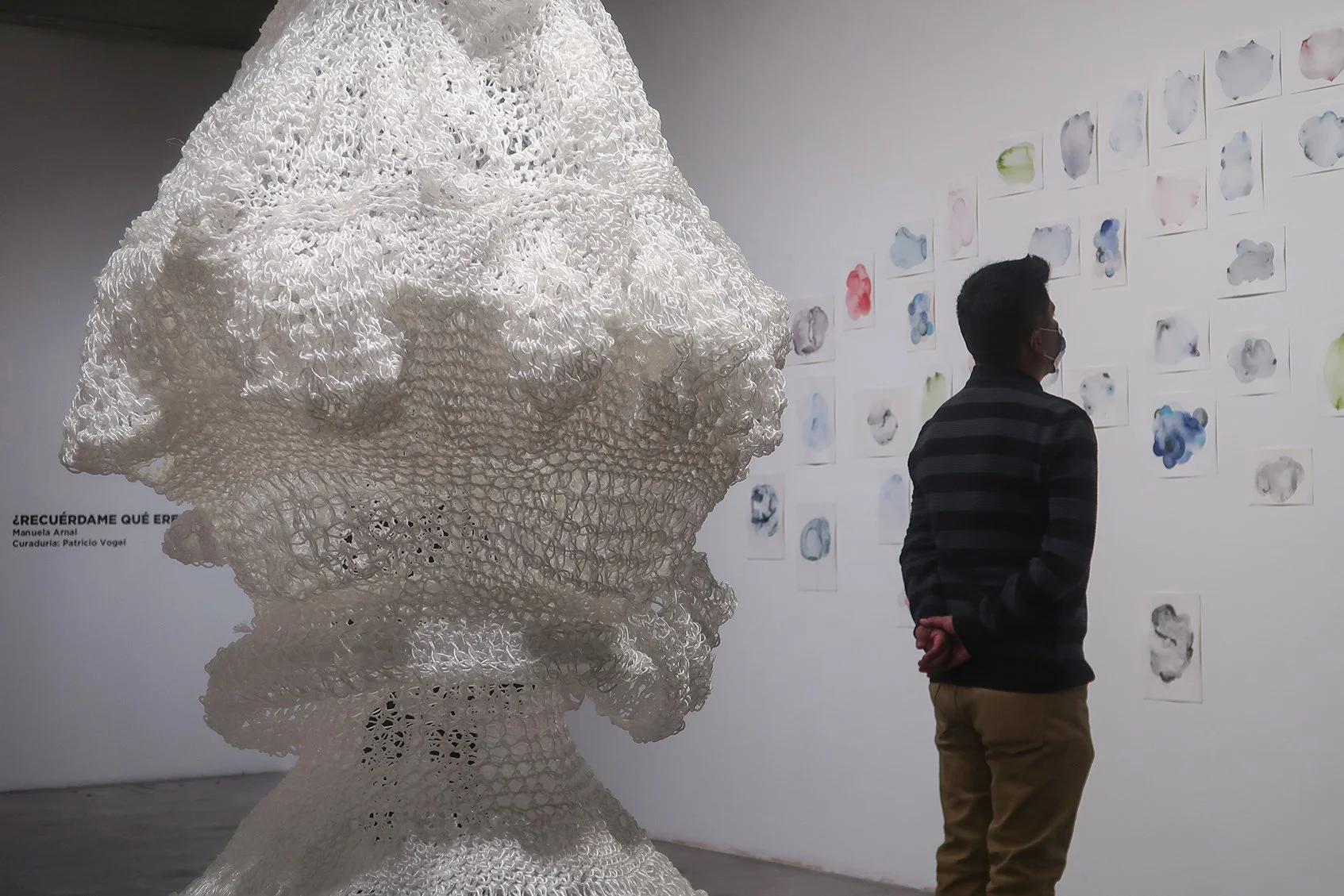
Bundle IV, 2025, White Plastic Tarp and Plastic Twine, 12 x 4 x 5 Feet.
Manuela Arnal
Artist Statement
I explore how memory and identity are configured through textiles, drawing, photography, and watercolor. My practice investigates the mechanisms of memory: Can we trust our memory to recognize ourselves and shape our identity? I am interested in memory not as a fixed record, but as something reconstructed through fragments, associations, materials, and acts of recognition.
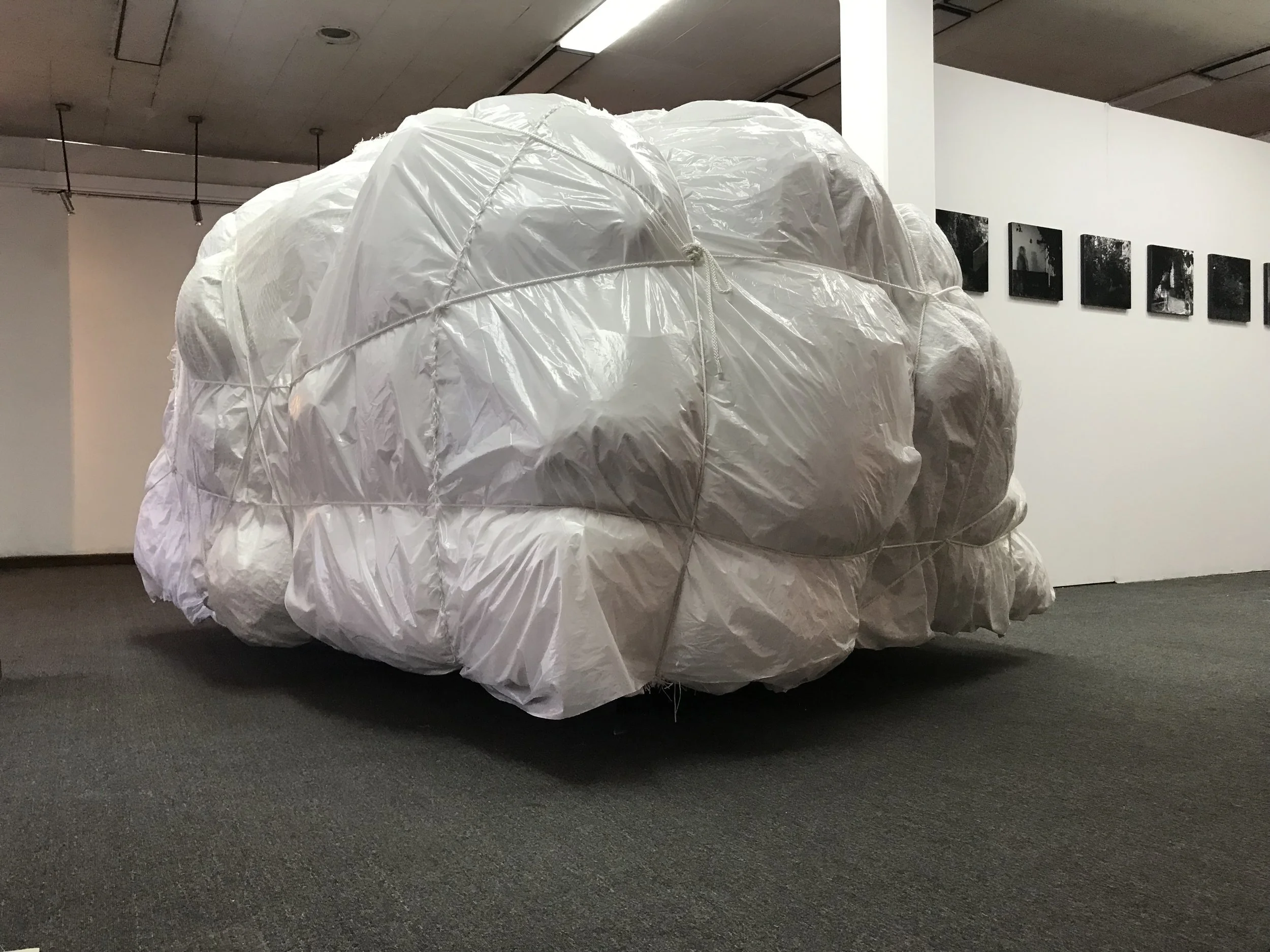
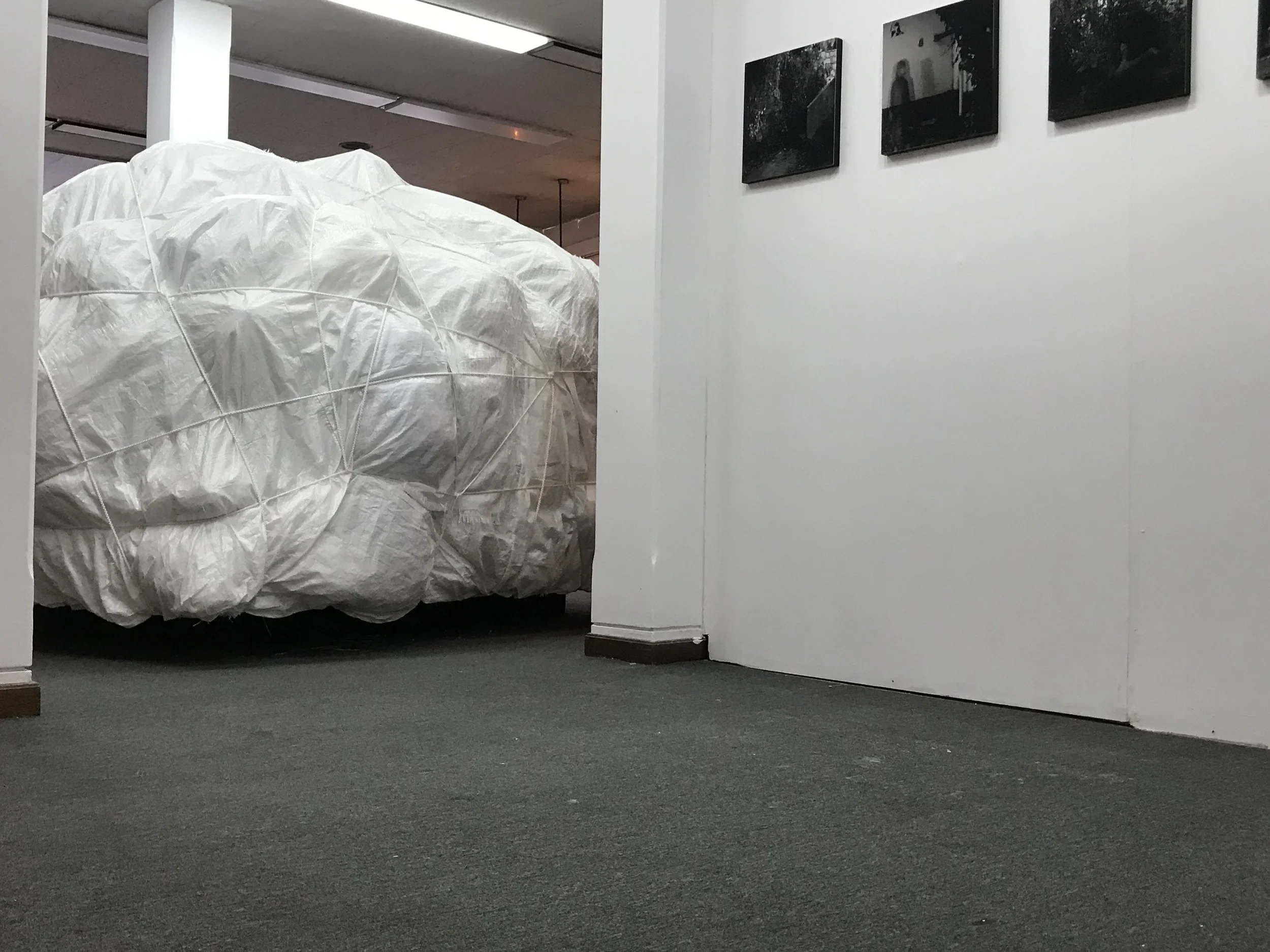
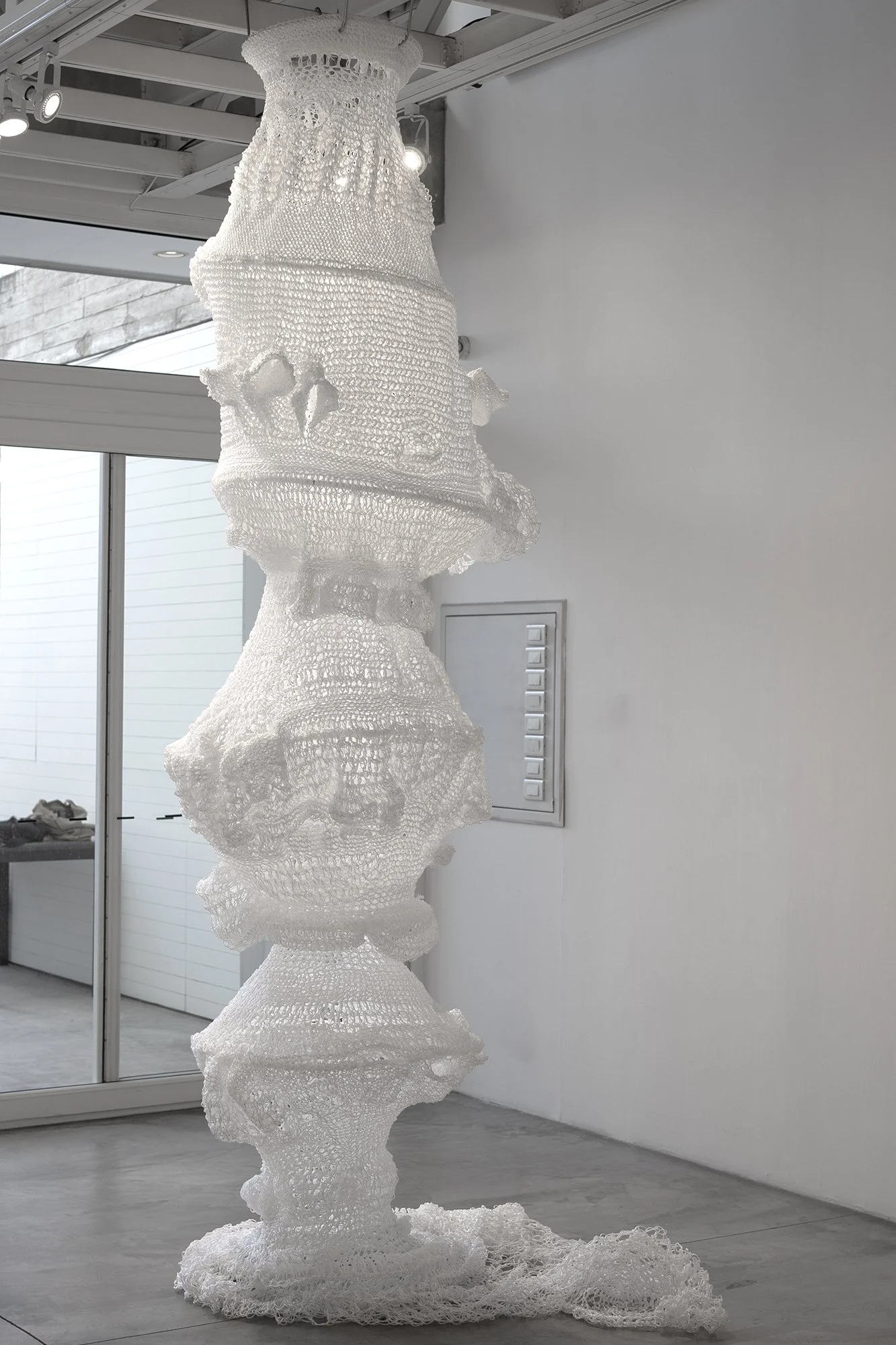
I work with white plastic tarp, undoing its woven structure, transforming it into strands, and knitting it again using crochet techniques inherited from the women in my family. Growing up in Bolivia, I experienced plastic not simply as disposable, but as a material reused out of necessity. A tarp might cover belongings during transport, protect something from the weather, or become a tent for children to play. In the United States, abundance often makes plastic synonymous with toxic waste. Where I come from, scarcity can make it a generous and versatile material, constantly repurposed in everyday life. By undoing and reconfiguring the tarp, I return to this idea of transformation: a material is separated from its original structure and given another form, much as memory continually reconstructs what we believe we know.
Plastic suggests permanence and insistence: it resists disappearance and remains long after its original purpose has been forgotten. White, in contrast, evokes memory as a blank space waiting to be written. It holds the possibility of containing everything while simultaneously threatening to dissolve into nothingness. Within whiteness, certainty disappears, allowing me to approach what is vague, unstable, and difficult to name.
The bundle is a recurring form in my work, drawn from the street stalls of my hometown, La Paz. At the end of each day, merchants cover their stalls with burlap cloth and secure them with ropes, transforming the day's visible accumulation of objects into closed, ambiguous forms. For me, the bundle becomes a metaphor for identity: it contains what cannot be seen but is known to be there.
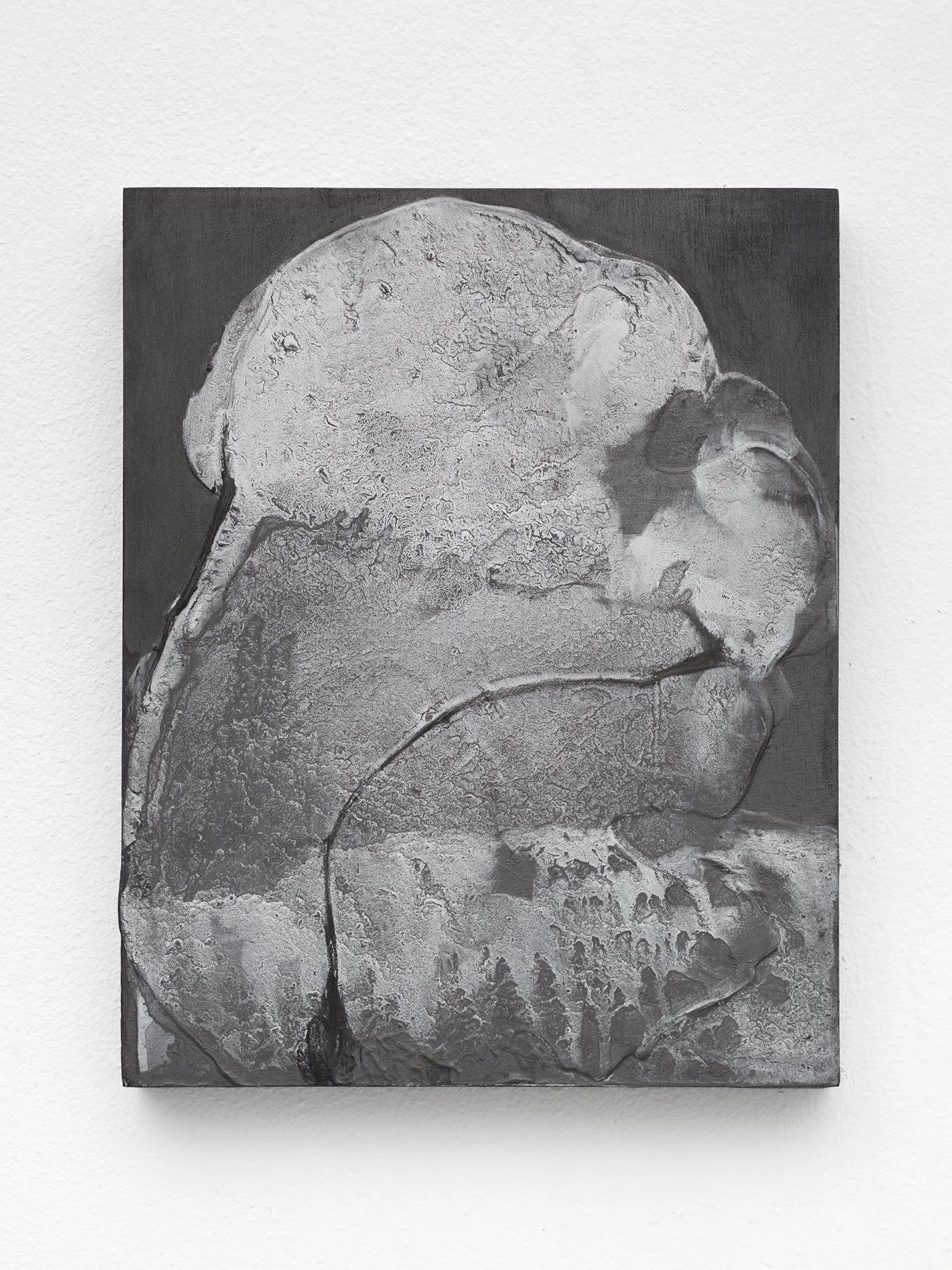
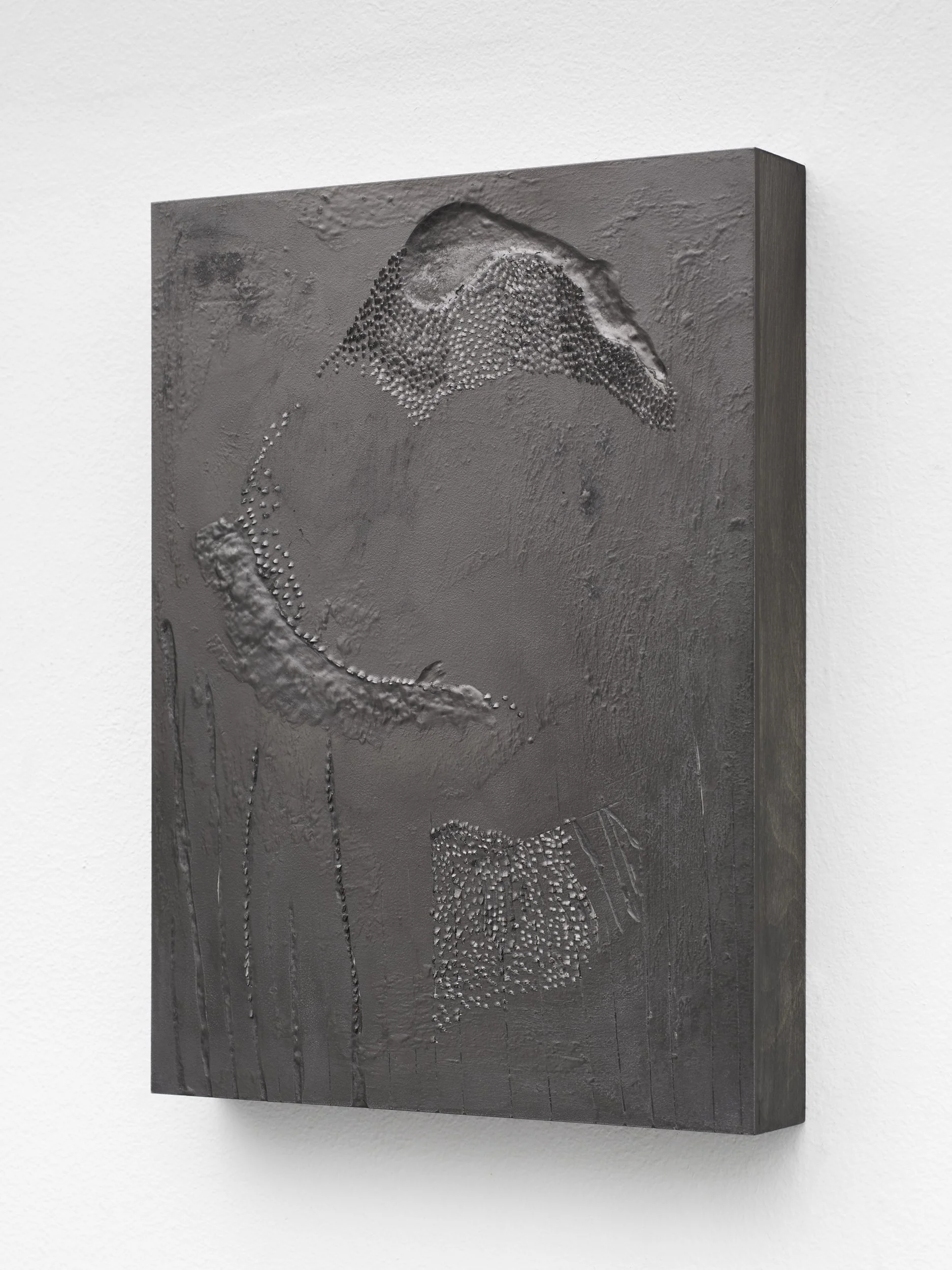
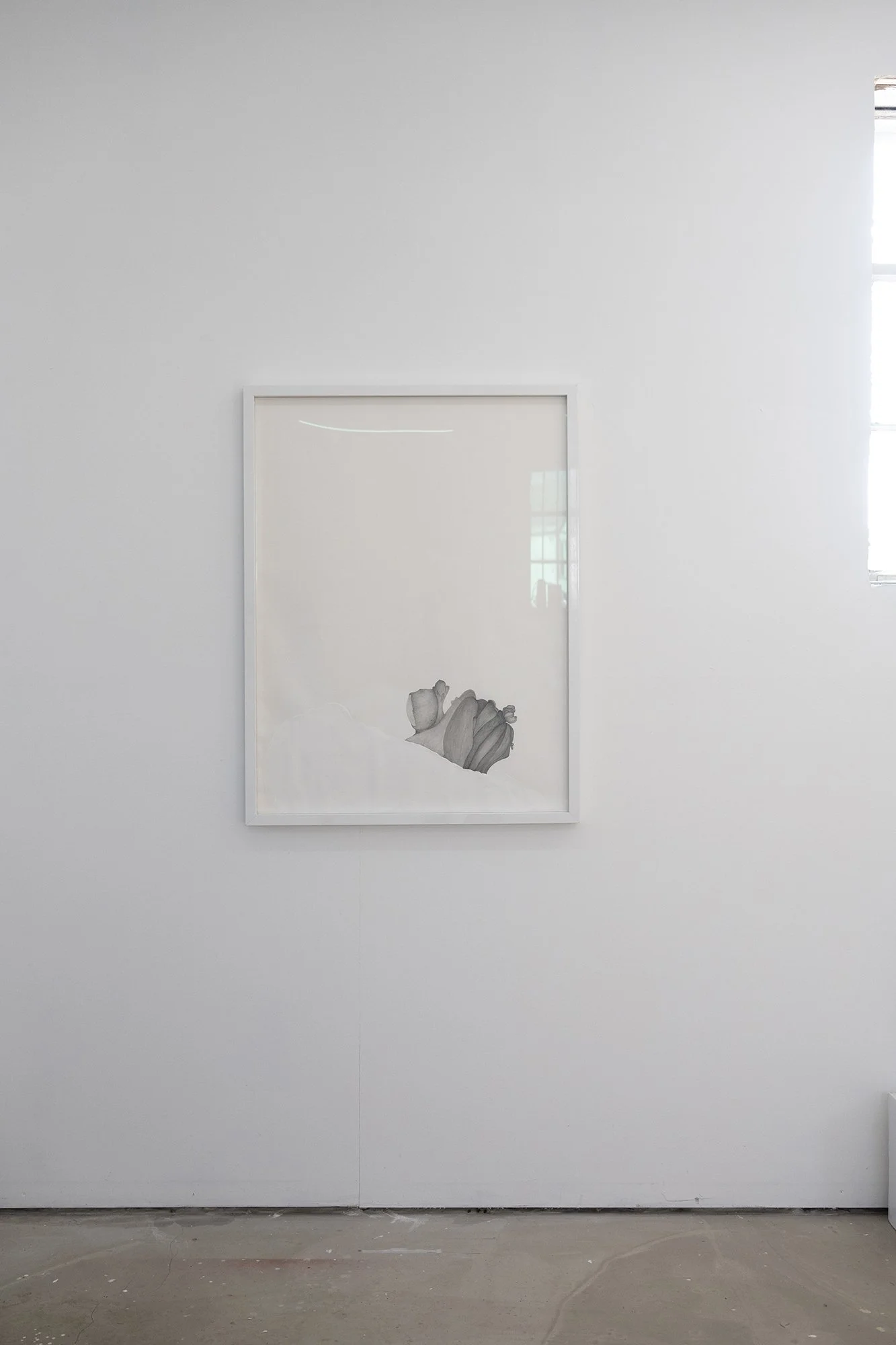
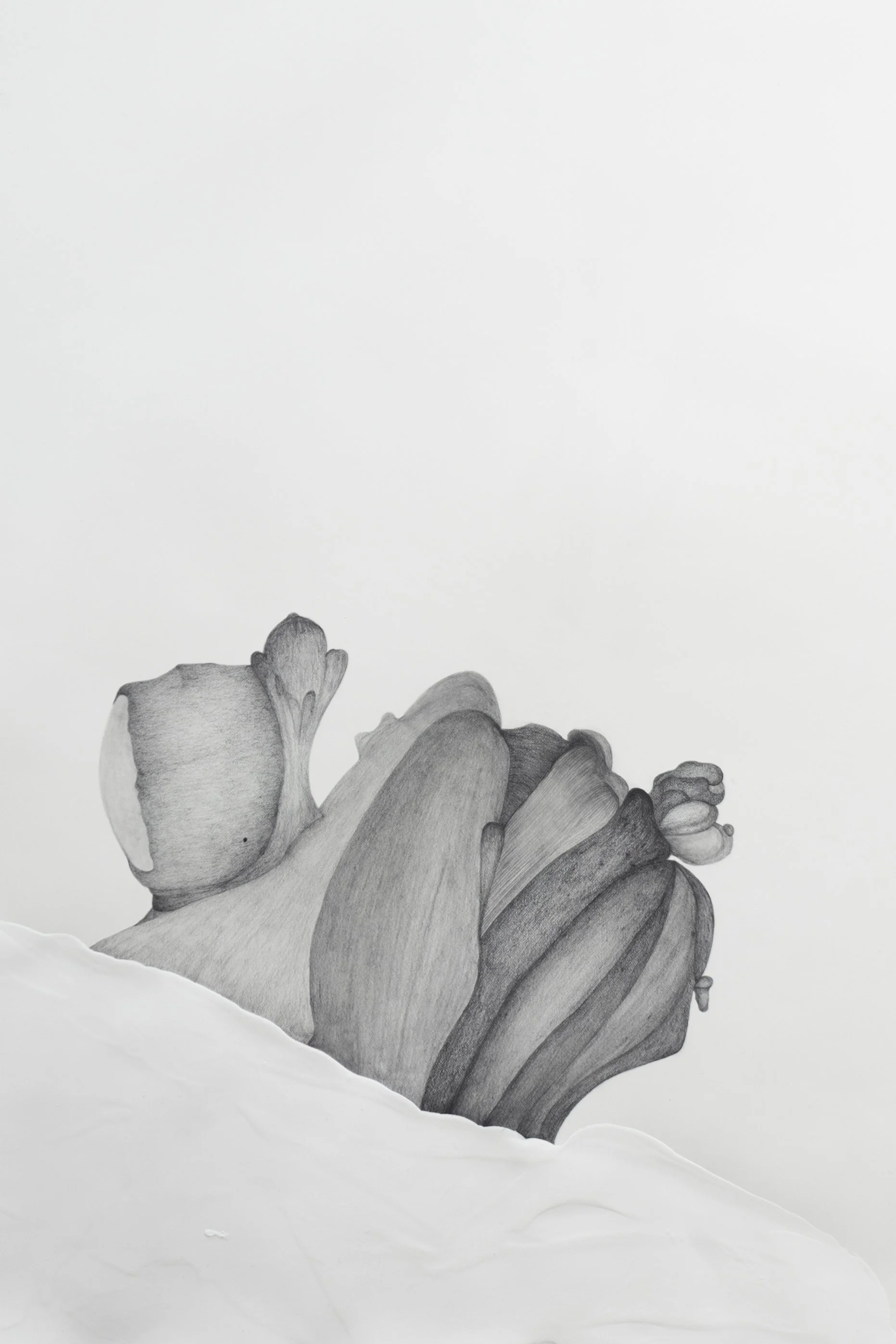
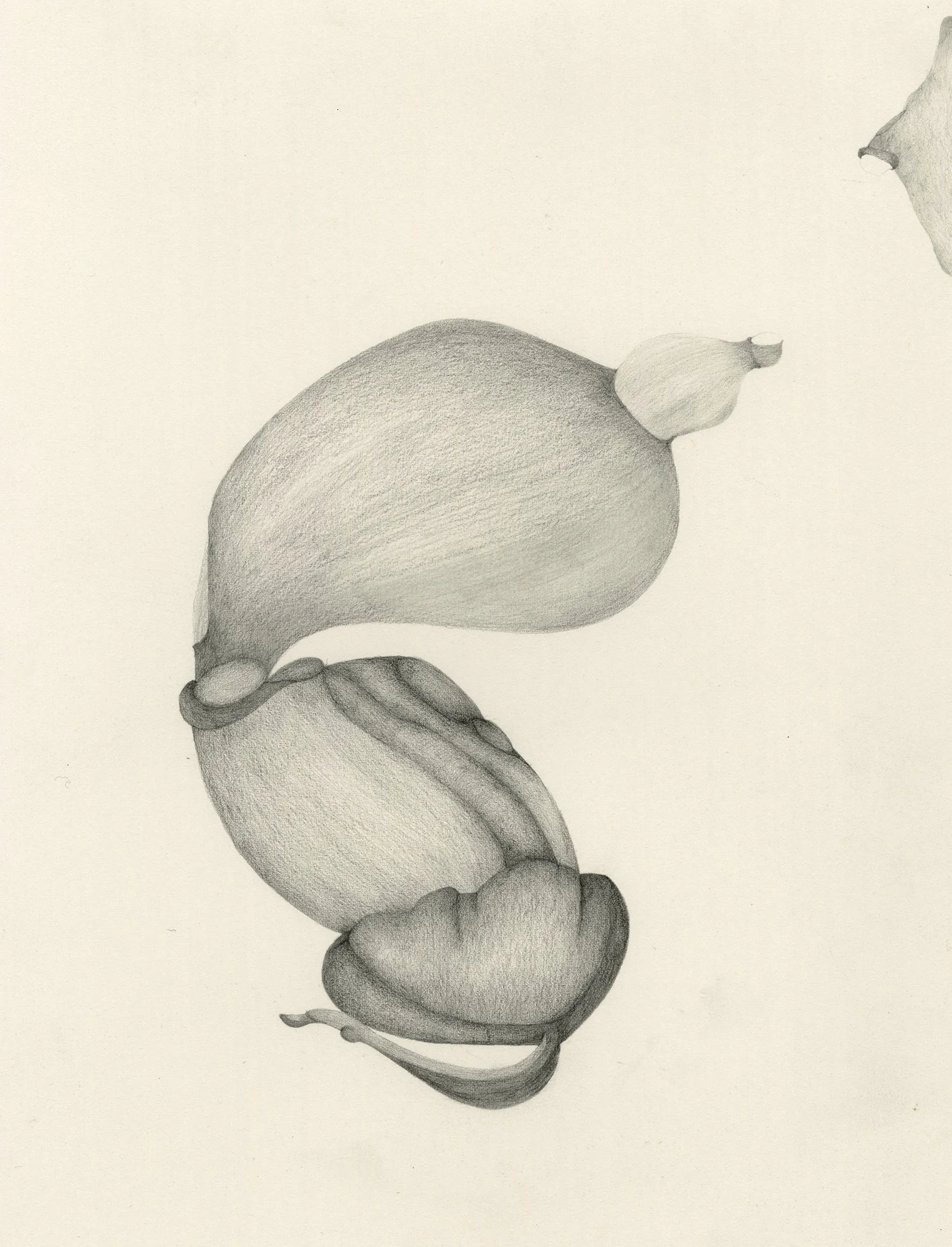
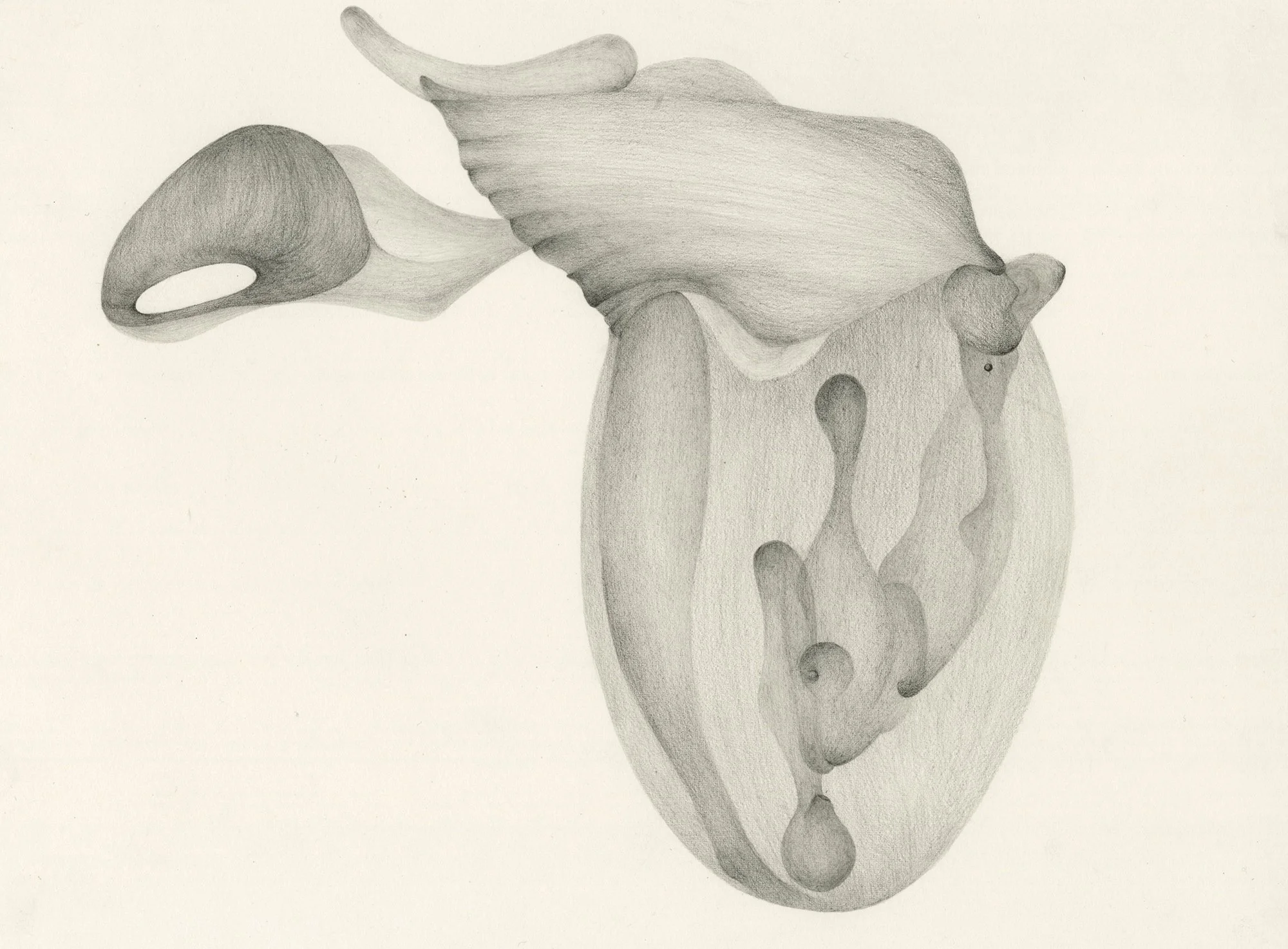
This tension between what can be recognized and what remains concealed also extends into my drawings. My research began with how plants and seeds move across territories, ignoring human-made borders, and with the systems of naming and classification imposed during colonial expansion. I became interested in who gets to name the natural world and whose knowledge those names preserve or erase. Naming becomes another form of organizing memory: it determines what is recognized, what is remembered, and what is made invisible. In response, I invent my own plants, forms that resist fixed classification and exist between the familiar and the unknown.
Across these materials and forms, I work with processes of undoing, covering, transforming, and reconstructing. I create spaces of uncertainty where recognition is possible but never complete. These ambiguous forms echo the experience of recovering memories that were once forgotten. I am interested in this threshold between recognition and the unknown, two forces that coexist within identity and remain constantly in flux.