
La Cosecha (The Harvest) Romina Chuls
GALLERY II
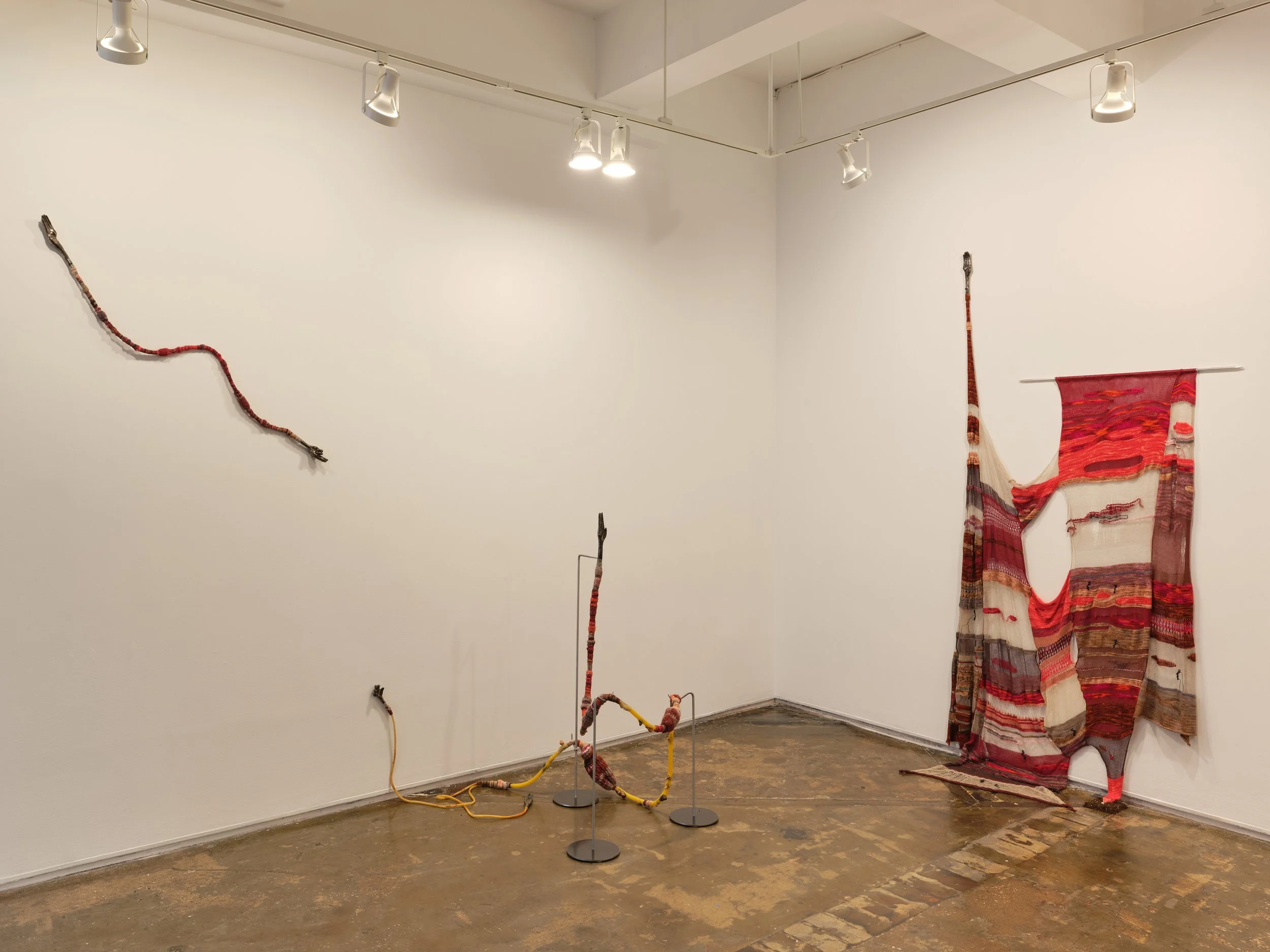
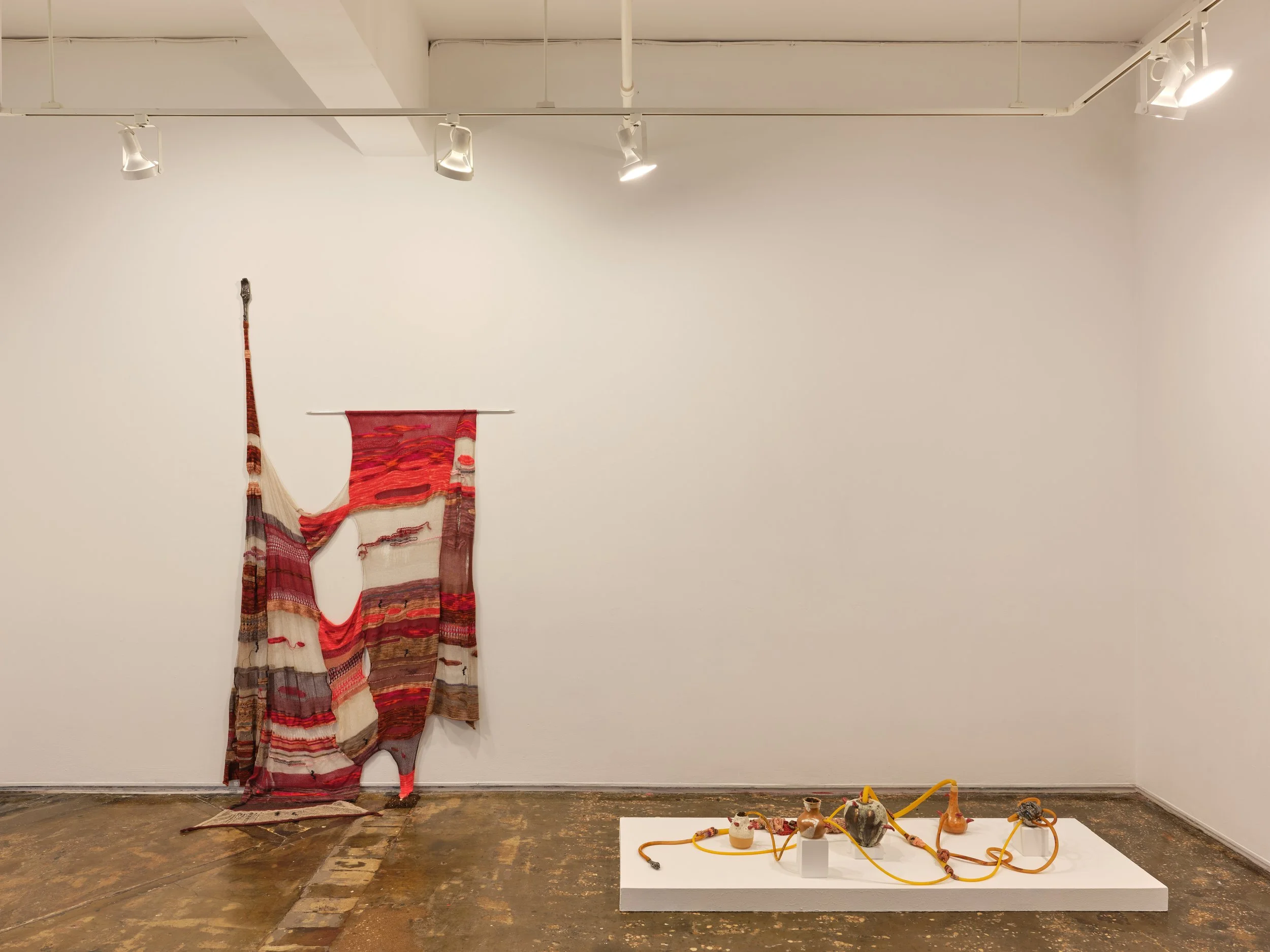
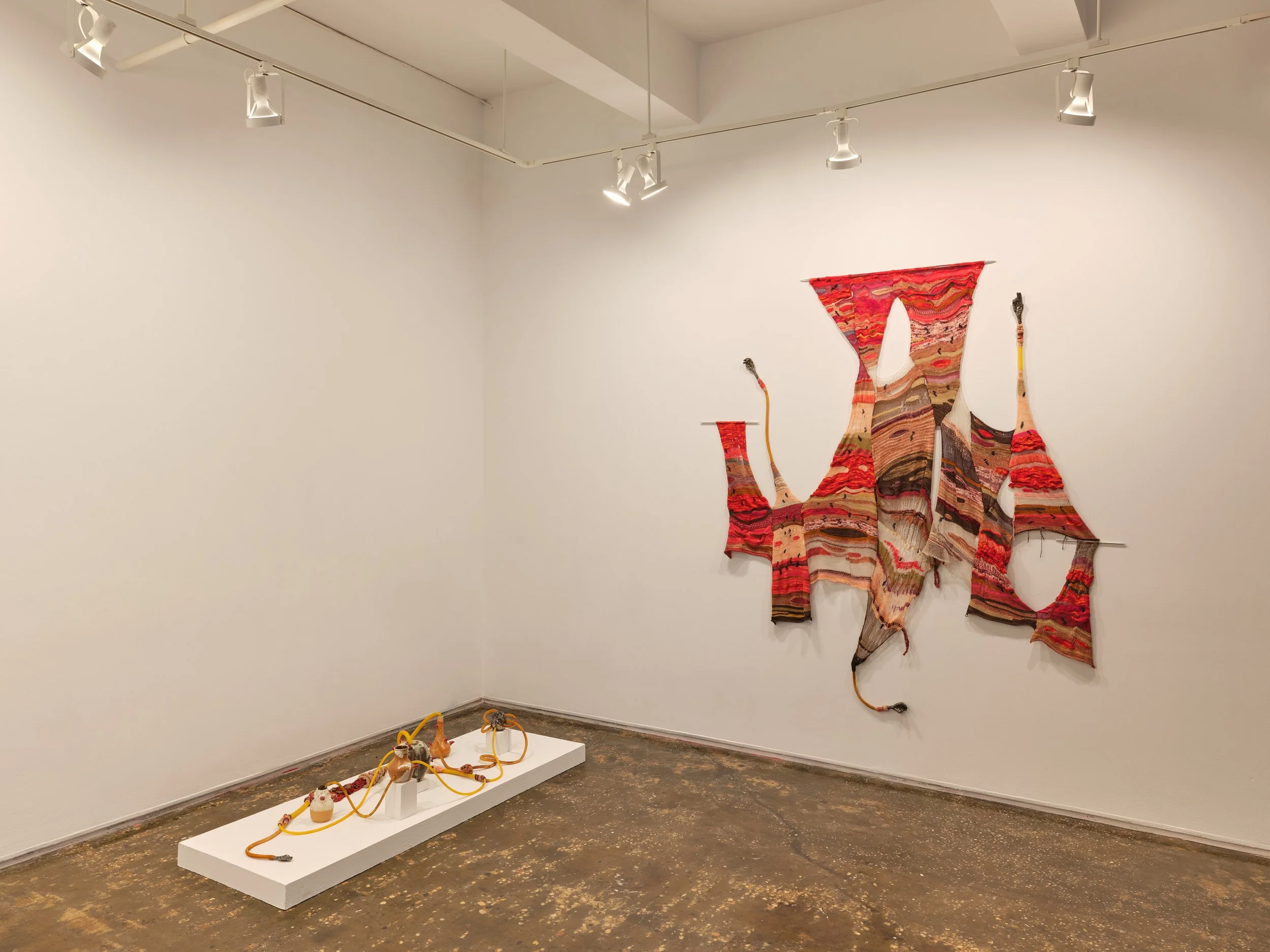
Romina Chuls, Eucarístia, 2025, Knitting (steamed with common rue), ceramic and aluminum rod, 101 x 48.5 inches.
September 5–October 4, 2026
Opening reception: Wednesday, September 9 from 6–8 PM
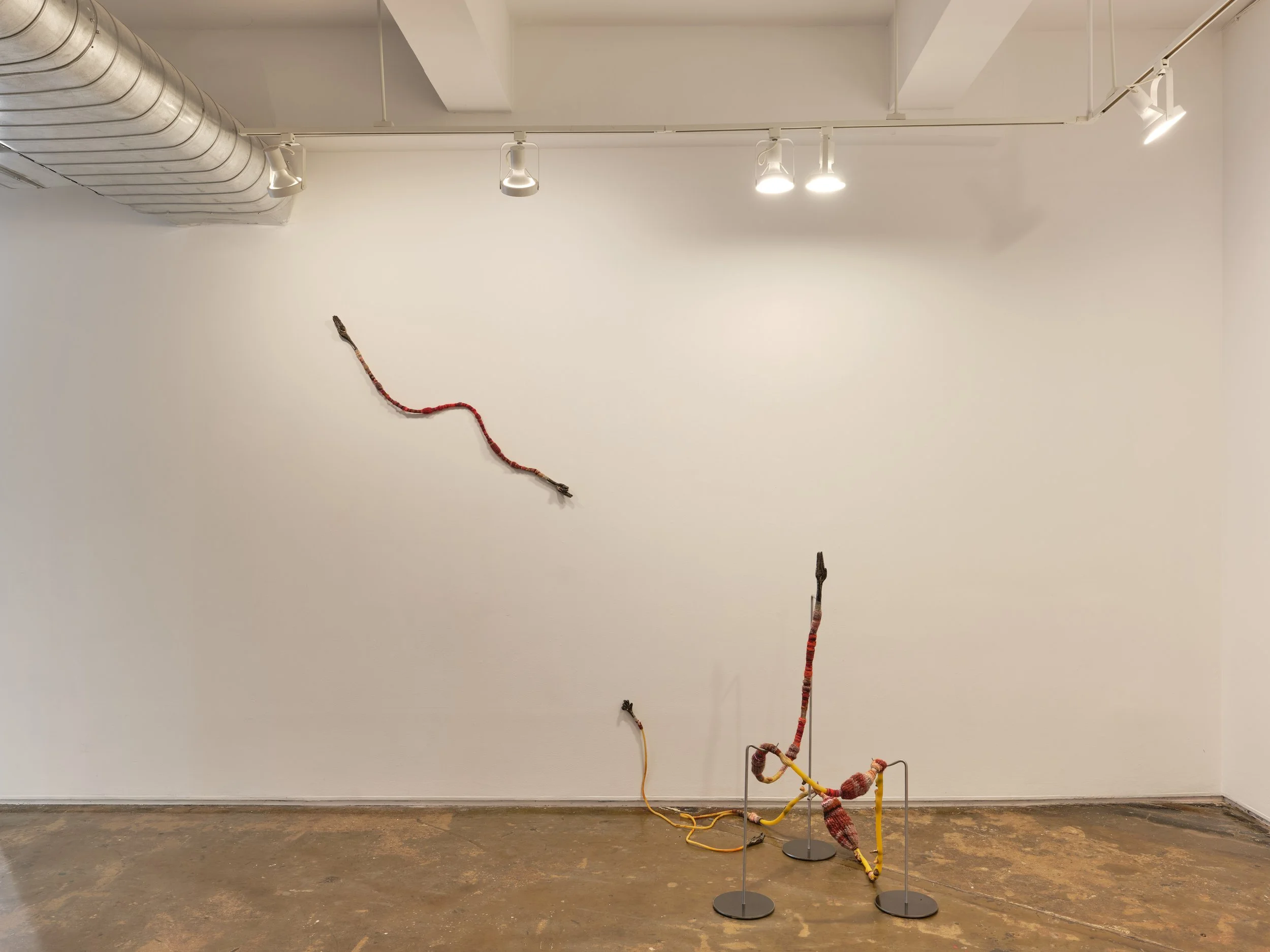
A.I.R. Gallery presents La Cosecha (The Harvest), a textile and ceramic installation by 2025-2026 A.I.R. Fellow Romina Chuls. This is Chuls’ first solo exhibition in New York City.
A pre-Hispanic funerary cloak poses an unanswered question. A hand holding an unidentified plant, three figures characterized as women, repeated supernatural faces, a multi-species crowd sticking out their tongues, and bean-like shapes are among the imagery that remain a mystery to this day. La Cosecha is a playful interpretation of the iconography of a Nasca textile dated 100-300 C.E., found in the Peruvian coastal desert and currently located in the collection of the Brooklyn Museum. The textile portrays Nasca agriculture; a knitted procession celebrating the harvest decorates its border. Resembling a placenta, the Nasca mantle was found wrapped around a corpse placed in fetal position, perhaps impregnated with the seeds for future plants. It’s an ode to fertility, to the interconnection of birth and death.
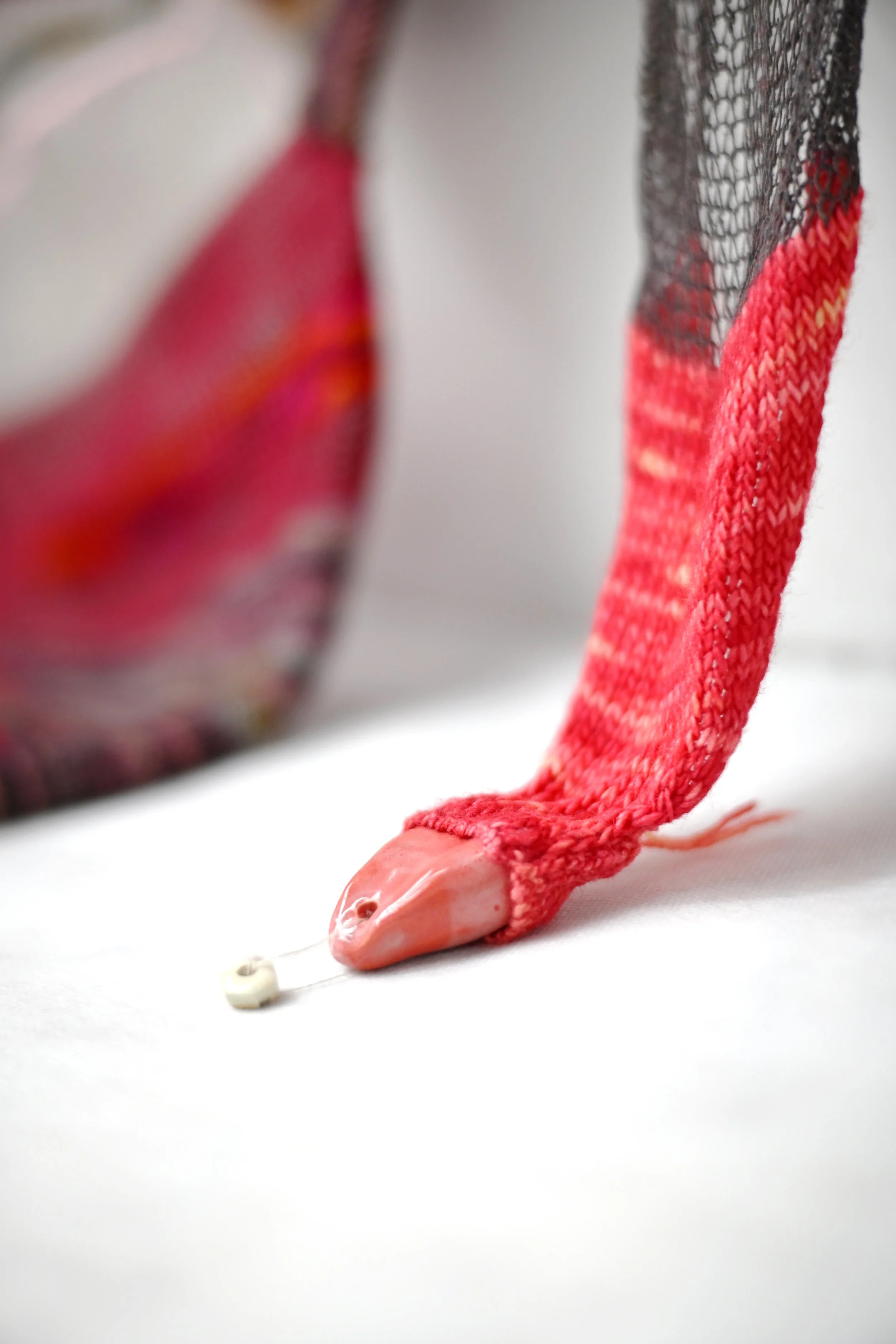
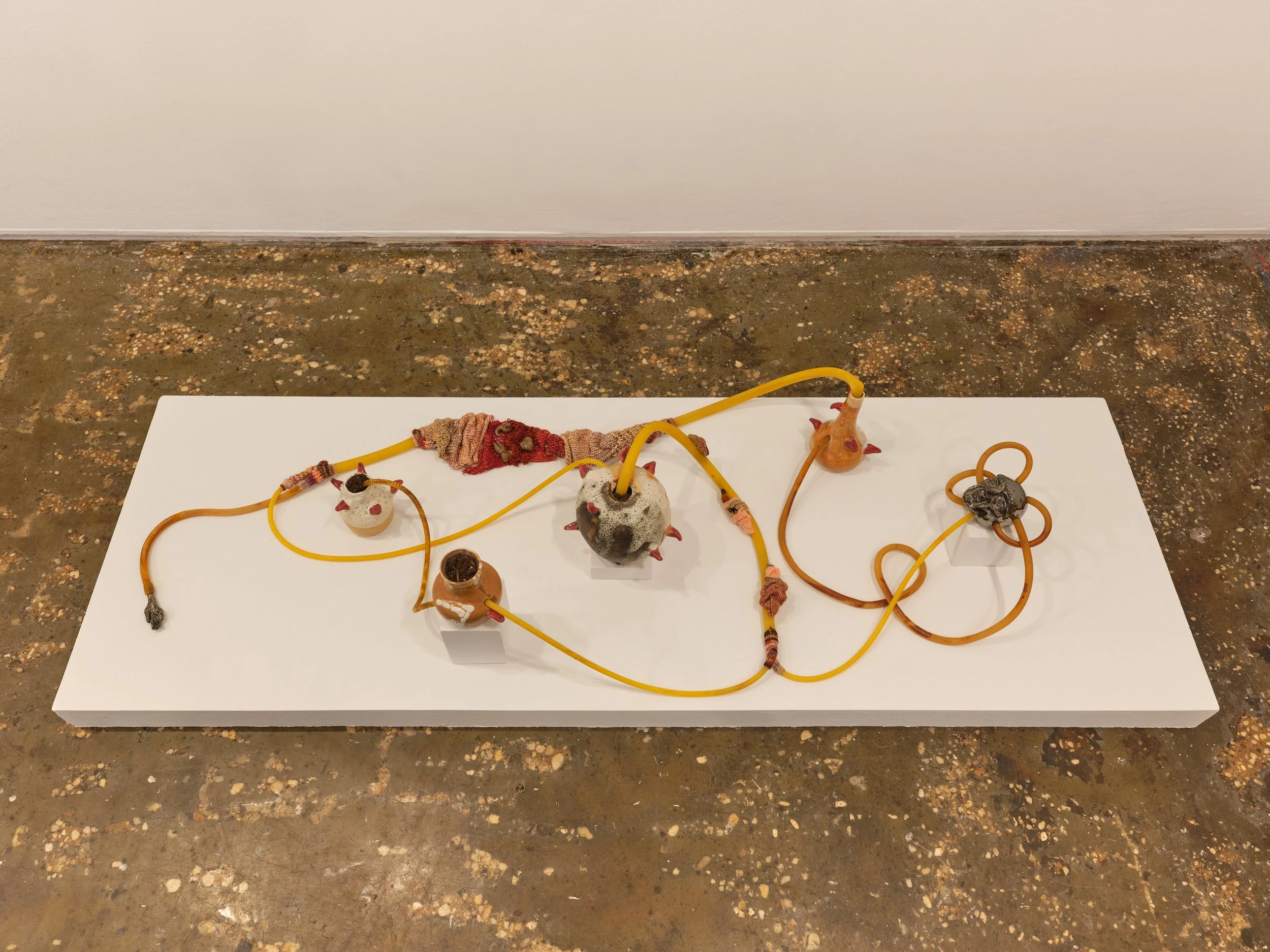
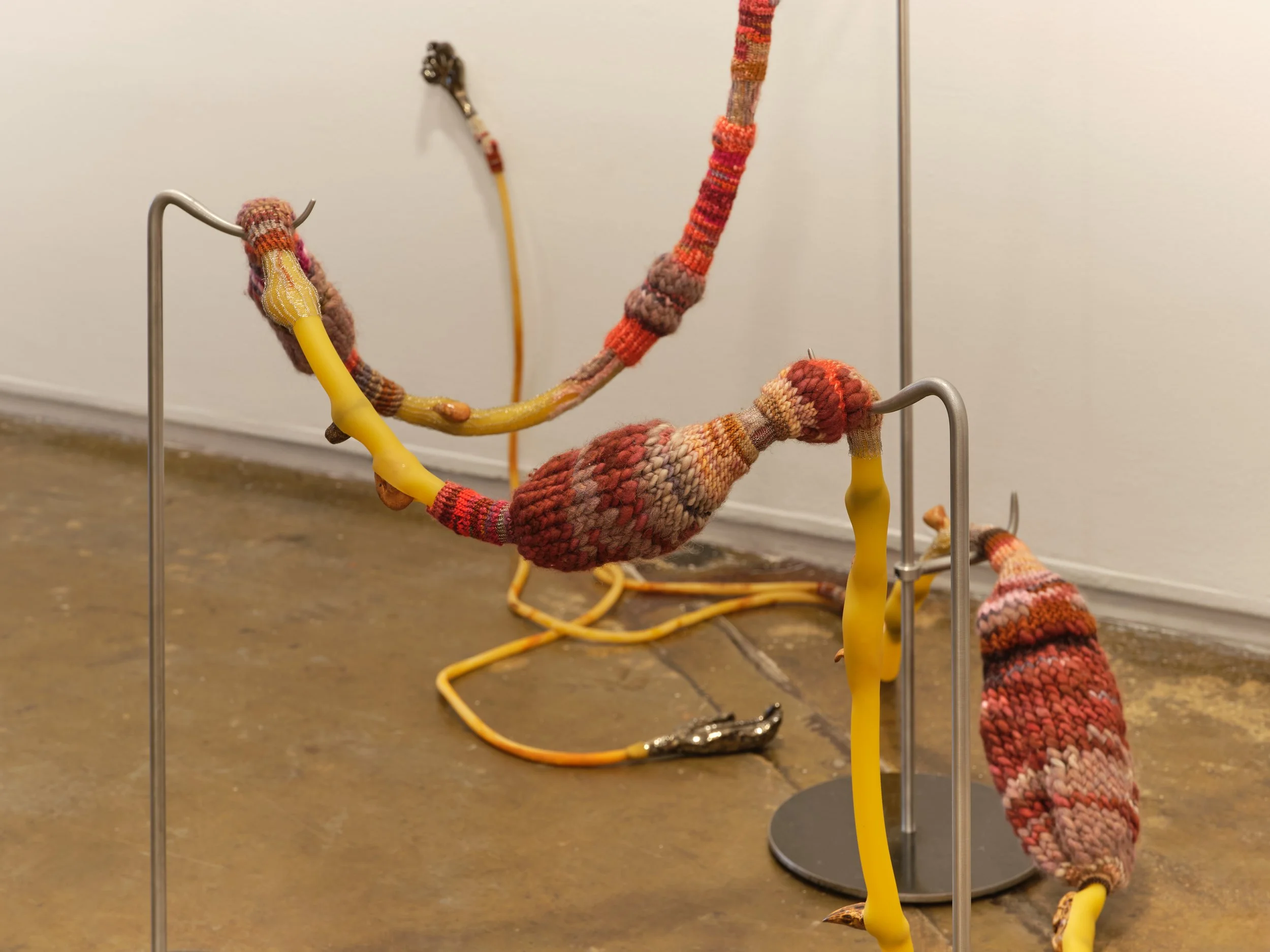
Utilizing material languages and allegory, Chuls reconsiders and repositions the industrial and procedural elements of reproductive care, combining allusions to medical technologies with forms inspired by the Nasca mantle. Knitted pieces such as Eucaristía (2025) or Las tres Marías (2026) invoke the textile’s opaque presence, while evoking Chuls’ own ceramic embryo-like shapes through black-thread details. Aluminum details resemble needles. Elongated hands become tools for midwifery, conjuring the caring touch of past and present doulas, mediators of the communion between life and death. Vases, ceramic appendages, knitted petals, and latex hoses stained with iron oxide intertwine to form a network of shared gestation.
In La Cosecha, Chuls knits a tale of a cycle of reproduction, punctuated by grief and pleasure. The work unfolds as a queer, feminist landscape, nourished by the mantle’s multi-species characters and the bond between an aborted embryo and a blooming flower. Gestation becomes a process that may begin, shift, and end multiple times. In this world, abortion does not mean no to life. It means yes to other life forms, other timings, other expressions. The body that aborts does not exist in isolation. It is a node in an ecosystemic dance.
View Romina Chuls’s artist page here.
View the Press Release here.
Recent Press: Noelani Kirschner, “Romina Chuls,” The American Scholar, September 21, 2026, https://theamericanscholar.org/romina-chuls/.
Photography by Matthew Sherman.