
Salt, Sulfur, Mercury
2026 National Members Exhibition
GALLERY I, II & III
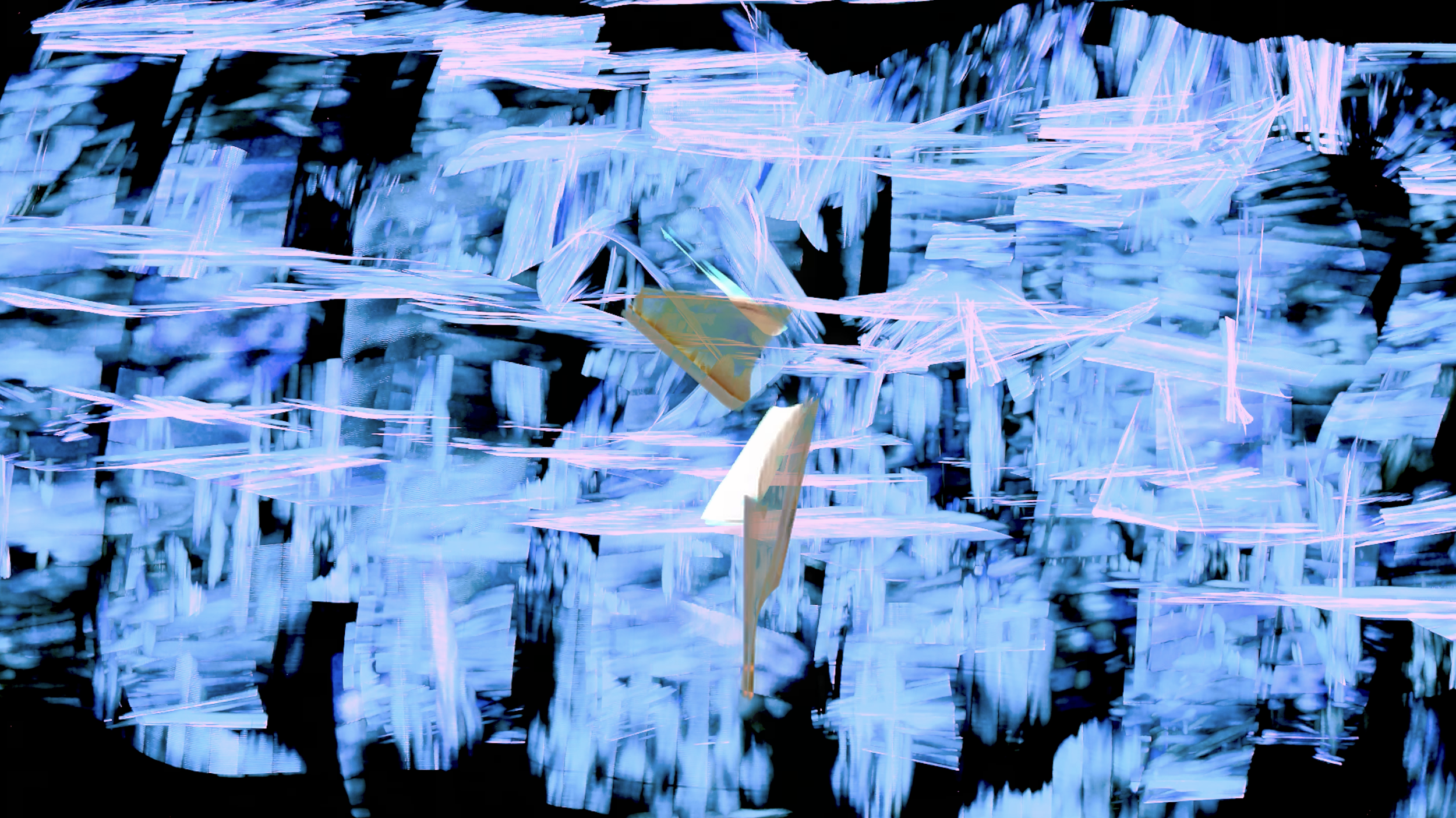
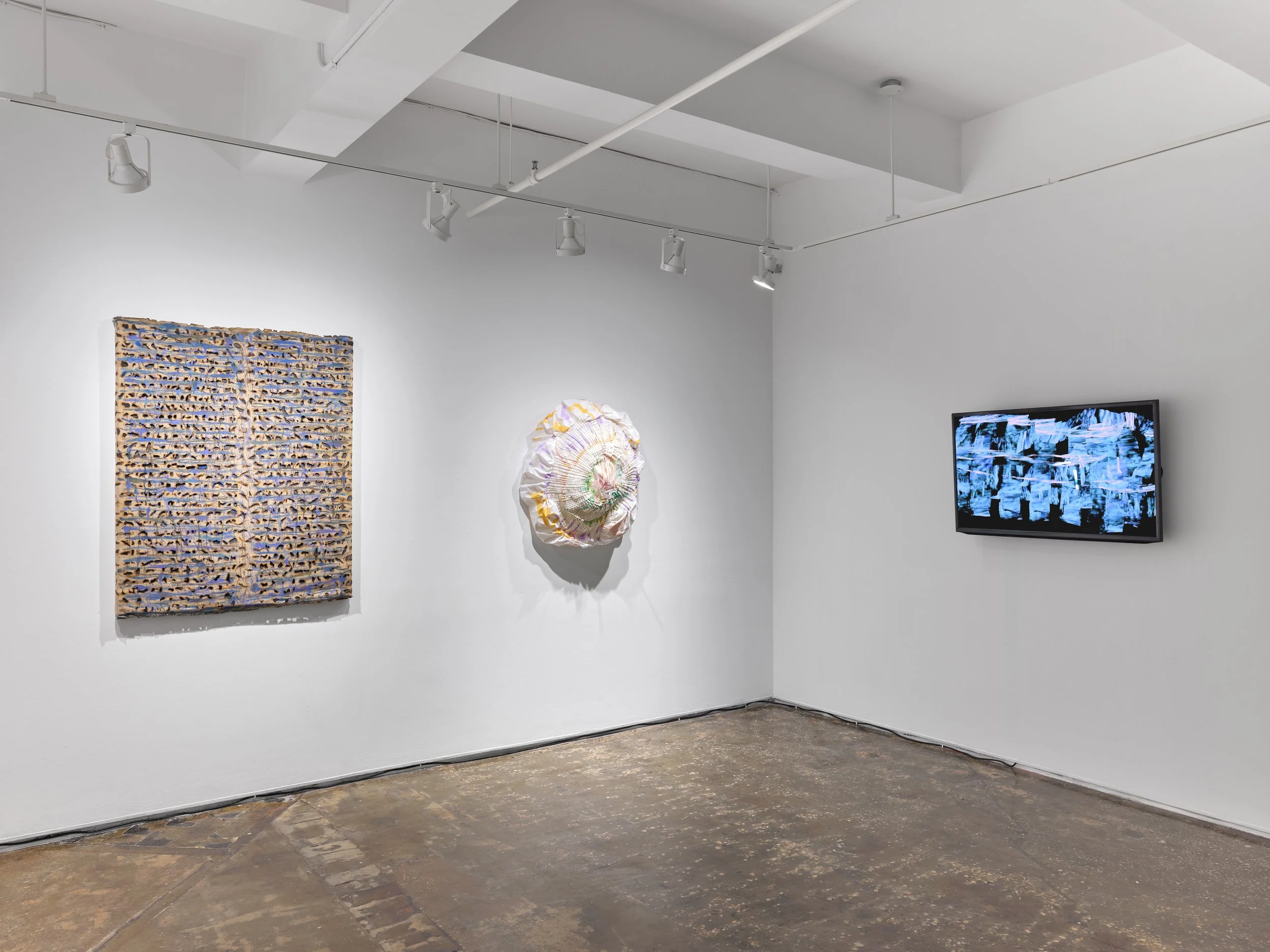
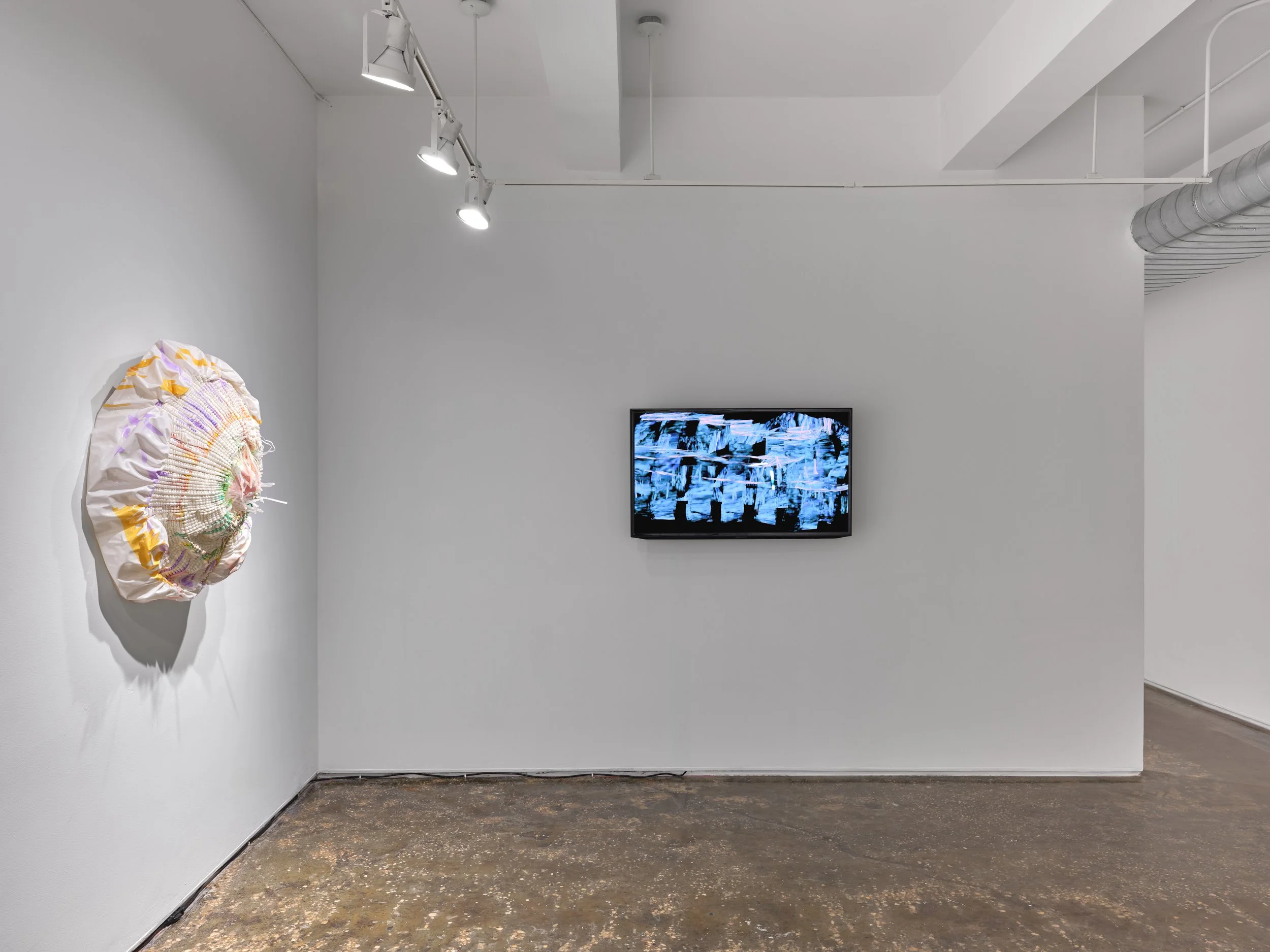
Lori Hepner, Cloud Cover: Sky Dancing, 2025-2026, Digital video, 5m 20s.
April 2 - May 3, 2026
Opening reception: Thursday, April 2 from 6-8pm
Irja Bodén, Lesley Bodzy, Robin Dintiman, Ali Givens, Nicolei Buendia Gupit, Lu Heintz, Lori Hepner, Olga Hiiva, Duwenavue Santé Johnson, Gongsan Kim, Sabra Moore, Nishra Ranpura, Cozette Russell, Carrie Scanga, Rebecca Weisman, Debra Wright, Amy Yoshitsu
Curated by Christian Camacho-Light, Taylor Bluestine, and Audrey Min
A.I.R. Gallery is pleased to announce Salt, Sulfur, Mercury, a group exhibition featuring the work of seventeen A.I.R. National Artist Members and curated by Christian Camacho-Light, Taylor Bluestine, and Audrey Min.
Salt, Sulfur, Mercury considers the artist as alchemist. Alchemy, a discipline both otherworldly and material, esoteric and practical, straddles the domains of science, philosophy, and magic. Like any human-devised system, alchemy is a way of making sense of the world. It ricochets across scales and ontologies, extrapolating cosmic truths from material observations. Alchemists were primarily concerned with identifying and then manipulating the affordances of matter, setting into motion fantastical processes of growth, decay, and metamorphosis. The artist shares with the alchemist many traits, not least of all a taste for invention, transformation, and material finesse. Most vitally, both entertain the impulse to pick at the seams of the known world.
This exhibition is organized according to the “tria prima” (three primes) of alchemy: salt (🜔), sulfur (🜍), and mercury (☿). According to the 16th-century Swiss philosopher and alchemist Paracelsus, these primes together provide the building blocks of all worldly matter. Salt is solid and crystalline; it is the body, the substrate upon which change occurs and the ash left behind in its aftermath. Sulfur is heat and expansion; it is the individual soul and the spark that ignites a flame. Mercury is fluid and volatile; it is the spirit shared by all things and the smoke that billows and curls. These “tria prima” provide the framework through and against which the artworks in the exhibition coalesce.
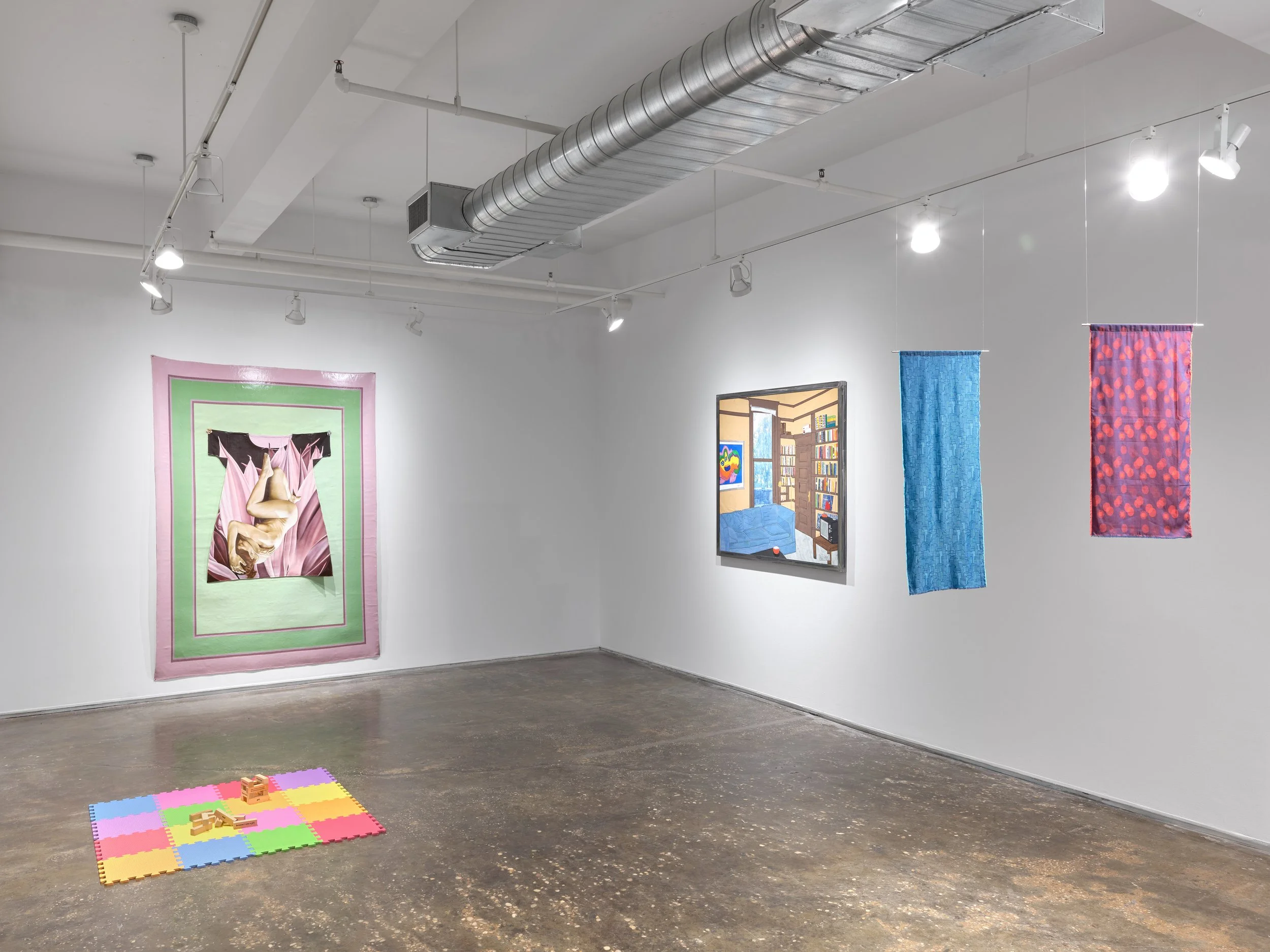
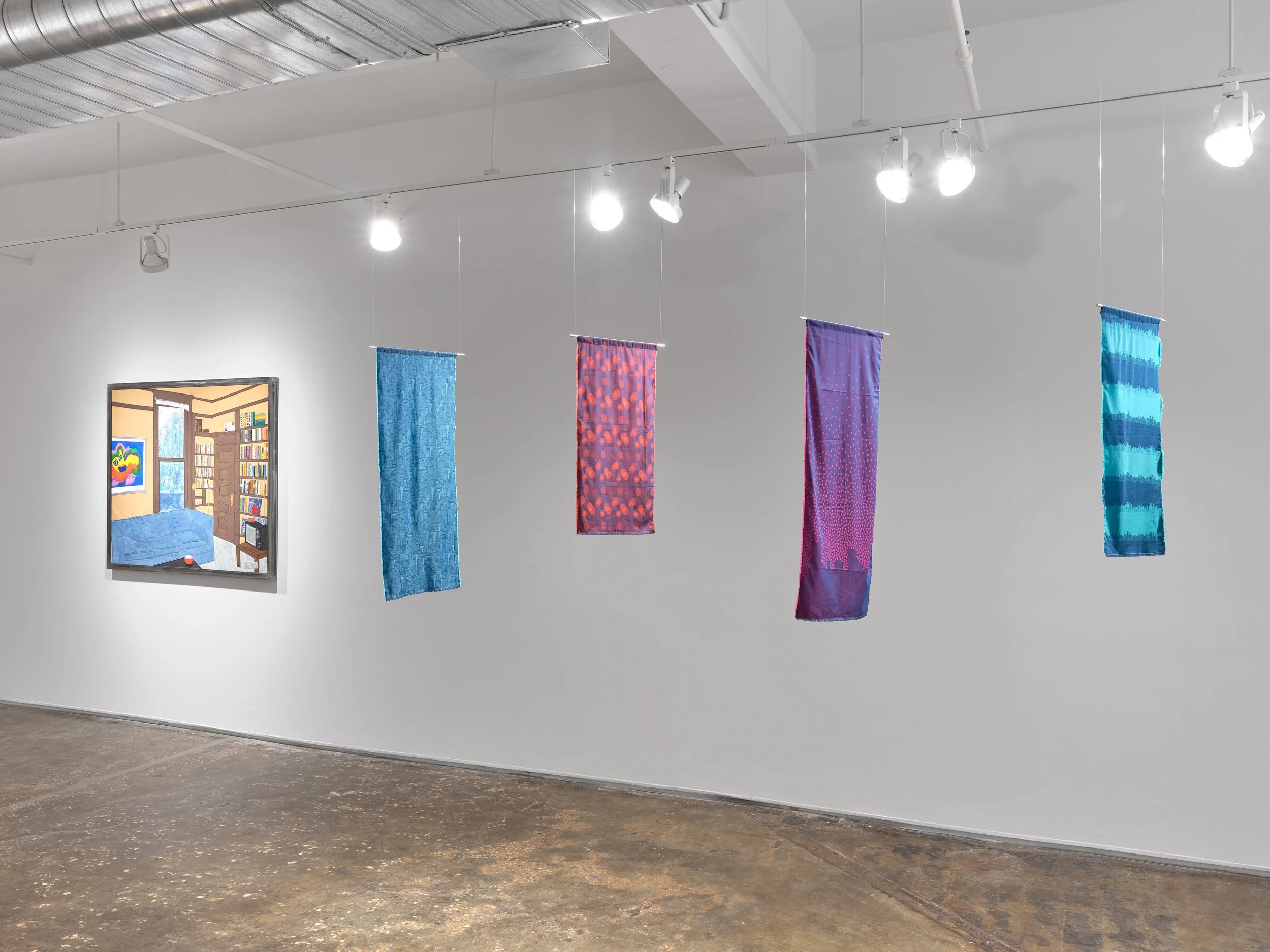
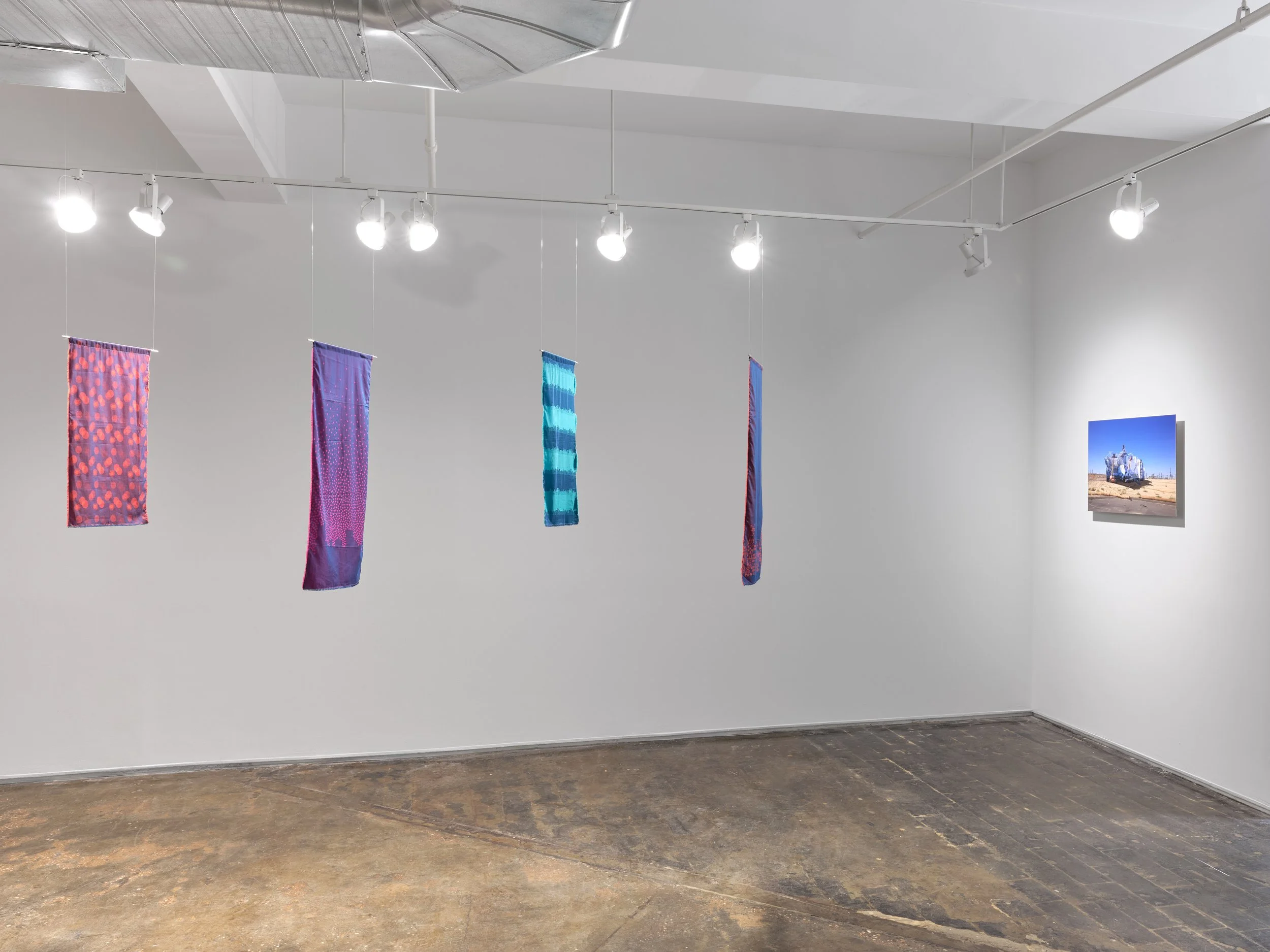
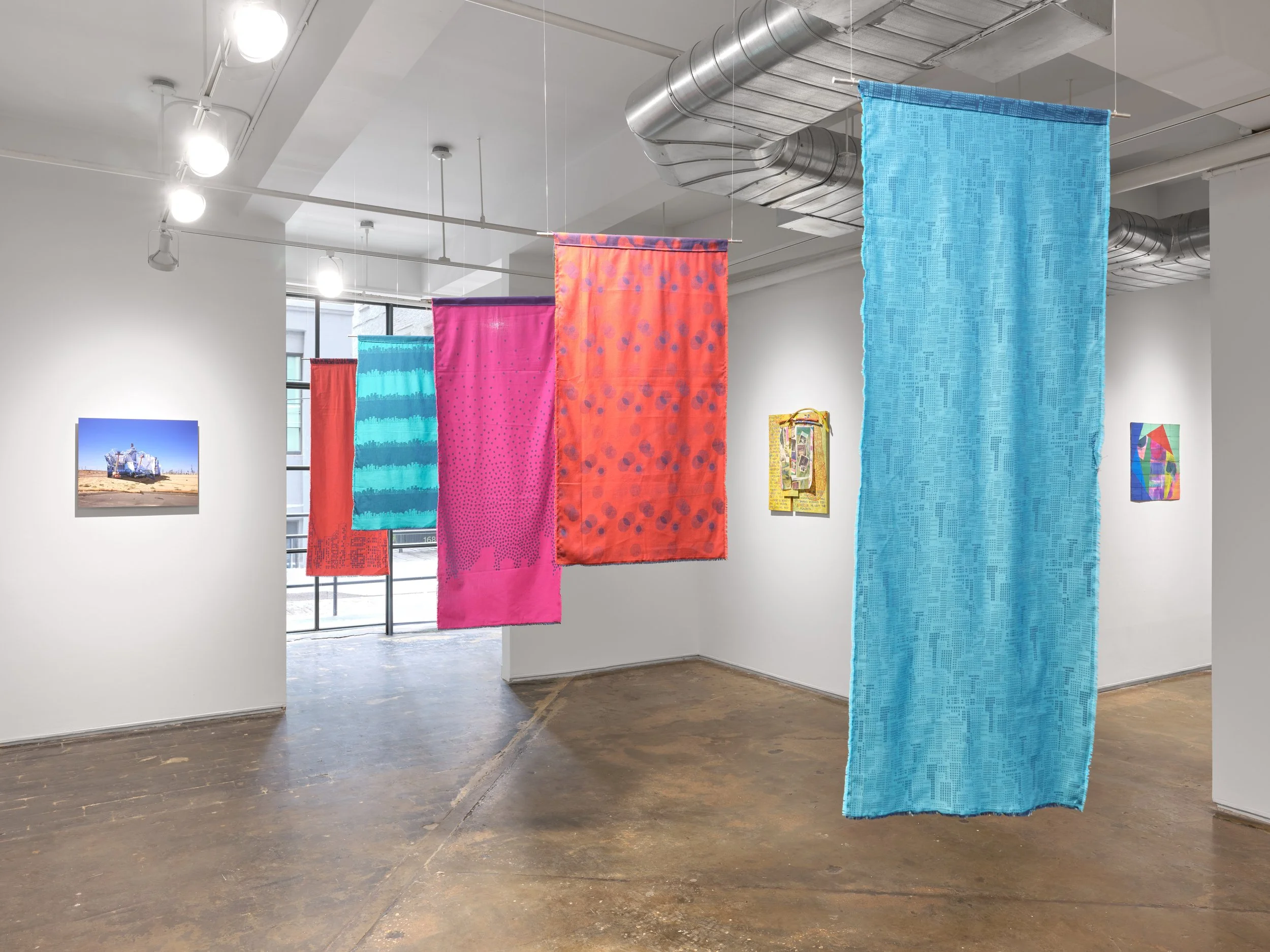
Salt is the form that matter takes, its shell and its shape. Drawing on salt’s connection to solidity and structure, several of the artworks in Gallery I consider the built environment. Night Lights, a suite of jacquard weavings by Nishra Ranpura, gives shape and texture to the fleeting impressions of a city at night. Suspended from the ceiling and visible from both sides, their reversible surfaces model the fractal and sensorial nature of the urban experience. Amy Yoshitsu’s print We Made It (San Bernardino County, CA) also interrogates the seemingly-neutral cityscape and its peripheries. Here a clump of construction—street lamps and signs, building facades and boom lifts—appears to simultaneously burst into existence and collapse into disarray. Yoshitsu contests the apparent permanence of human structures, which do not spontaneously emerge from the earth but are rather tethered to often-obscured and changeable infrastructures. For Ali Givens, the home is a vessel for life just as the body is a vessel for the spirit. In The Library, she recreates a room from her childhood home using collaged fabric, a re-presentation scaffolded by subjective memory as much as by photographic documentation. The contrasting surfaces of printed and color-blocked textiles, punctuated by hand- and machine-stitching, speak to the ways in which memory is textured by our material worlds.
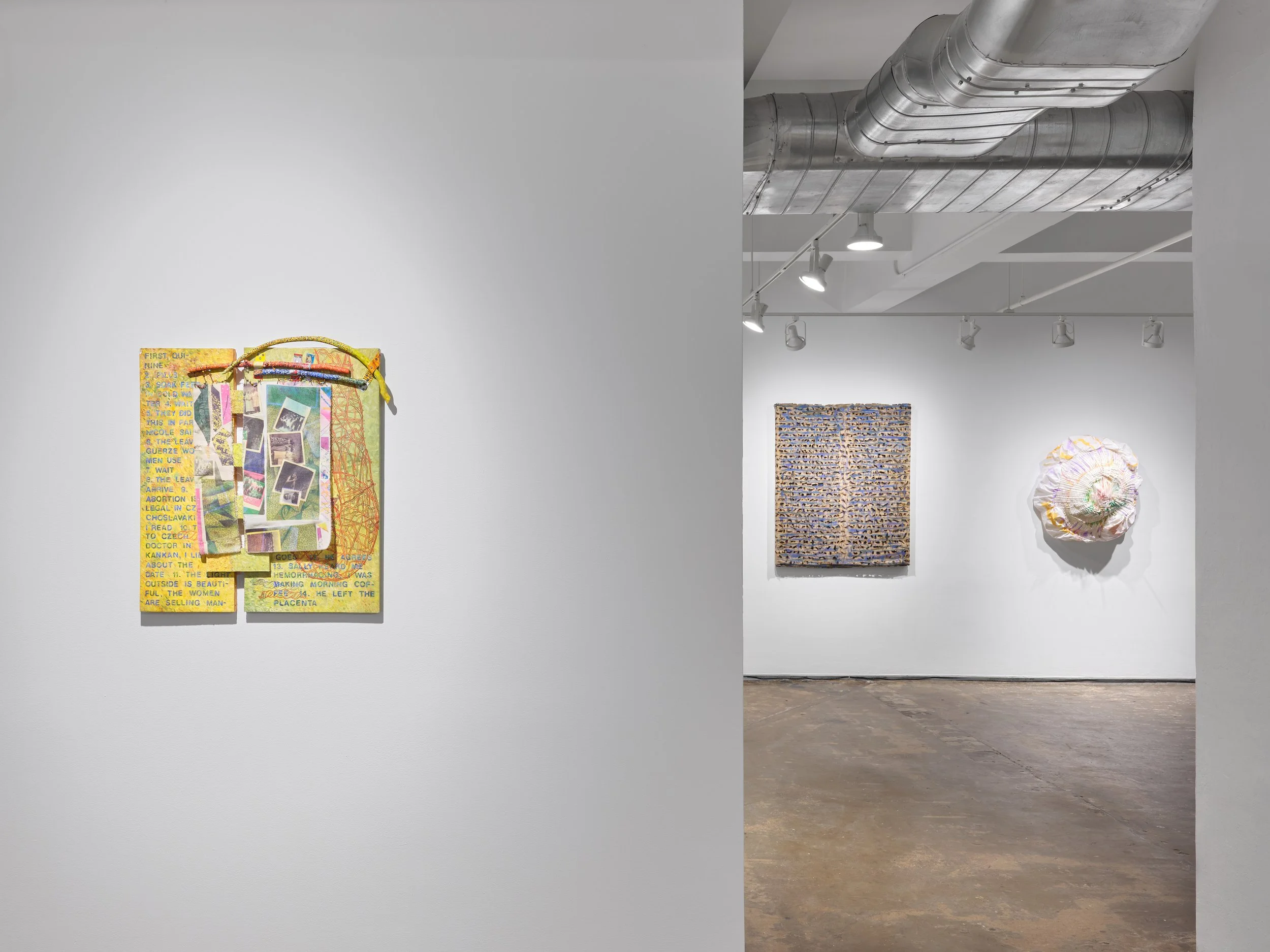
Other artworks in Gallery I recall salt’s associations with the body. Lu Heintz’s wall-mounted sculpture T-shirt #1 draws on embodied knowledge and histories of labor. Heintz embeds gendered and classed gestures, such as sewing and folding, into stitched surfaces that both evoke and elevate the familiar form of a tee shirt. Adama, a large-scale oil painting by Olga Hiiva, pays tribute to relatives’ experiences of displacement and violence. The tablecloth which serves as its substrate indexes absented memories and bodies. Splayed flat rather than draped on a table, it now hosts the similarly-deflated husk of a nightshirt. In Sabra Moore’s First Quinine, stray, piercing words and phrases emerge from the layered assemblage, as a numbered list of instructions reveals itself to be the artist’s memories of an illegal abortion. Drawing on inherited traditions of salvage and quilting, Moore crystallizes memory into a cumulative corpus of collective and individual experiences. Syntax, Debra Wright’s sculptural installation, critiques the ways in which bodies are policed from an early age. The interactive blocks invite viewers to configure their own accounts of gendered constraint on a foam mat reminiscent of a childhood playroom. Meanwhile, Rebecca Weisman reminds us also of the body’s malleable and haptic capacities. In her two-channel video installation Tap Lessons, the artist repeatedly snaps blush-toned elastic against her skin, a rhythm counterpointed by a reel of a youthful tap-dance performance. Weisman explores themes of age, gender conditioning, and discipline using the body as a percussive and symbolic surface.
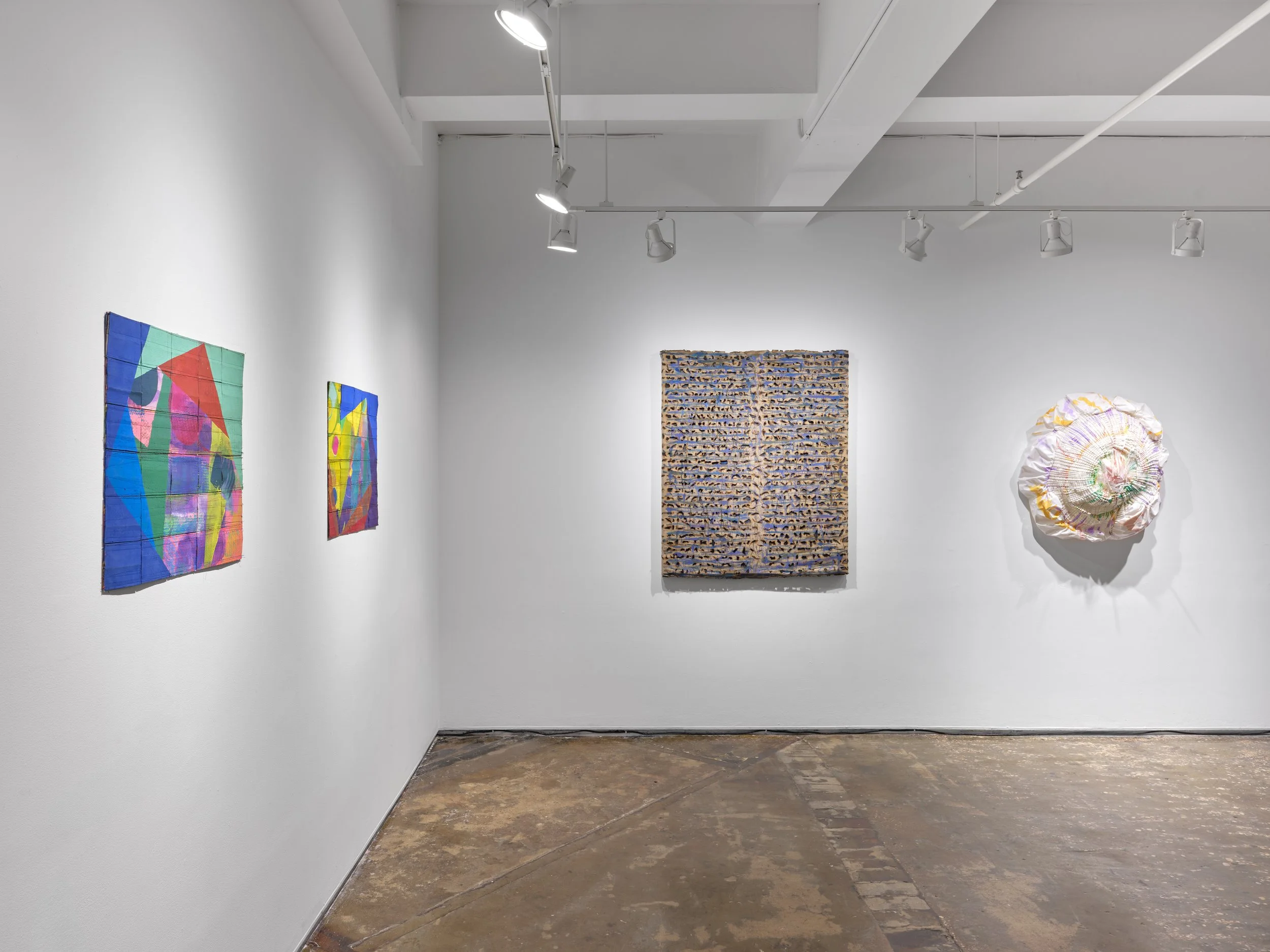
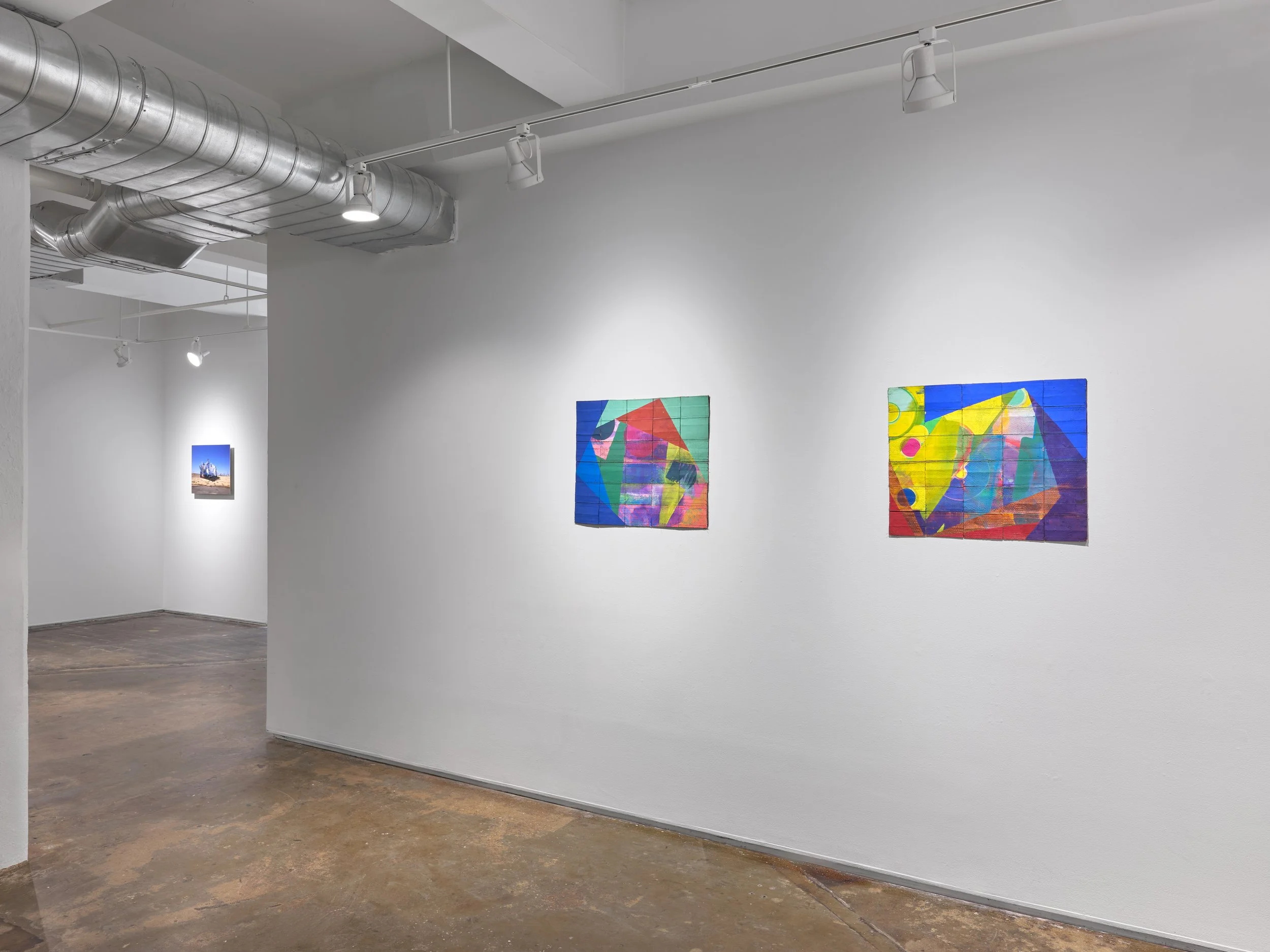
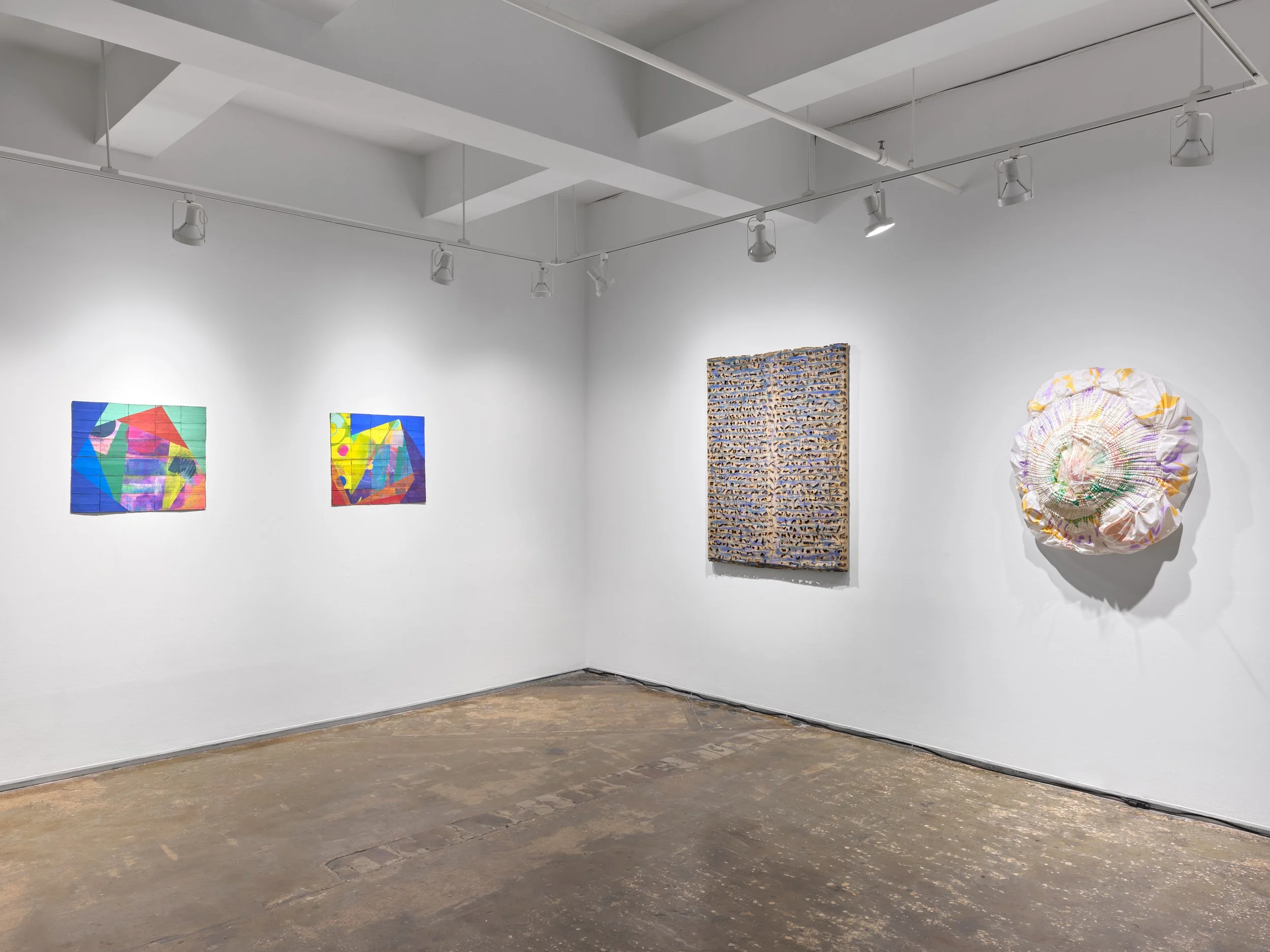
Sulfur is the energy necessary for alchemic transformation. It is the prime that represents the individual soul in all of its resonant and expansive potential. In Gallery II, a pair of vibrant painted collages by Duwenavue Santé Johnson evoke sulfur’s propulsive, motivating force. Johnson describes her practice as “a necessity born of resilience,” marrying the compulsion to survive with the compulsion to make. The plays of color and texture on her hand-stitched surfaces balance intent and spontaneity—an active process of intervention and negotiation that simultaneously metabolizes and metaphorizes acts of living. Lori Hepner’s movement-based practice similarly serves as a creative refuge for the artist. Her kinetic process harnesses light using custom-programmed, wearable LED technology captured by long-exposure photography and video. Cloud Cover: Sky Dancing indexes not only Hepner’s motions but her subjectivity, transmuting private, ephemeral gestures into an active field of glitchy textures and layered afterimages. Gongsan Kim also mobilizes small actions laden with significance, in her case ritualistic burning. Like a funeral pyre, the burnt linen surface of her painting Unburied Testimonies commemorates unheard and unknown victims of North Korea’s dictatorship. Ballooning out from the wall, Lesley Bodzy’s Indelible Sagacity appears to be simultaneously inflating and deflating, struggling against its confines and collapsing into itself. Becoming is for Bodzy a vital indeterminacy which both animates and vacates the forms of her sculptures.
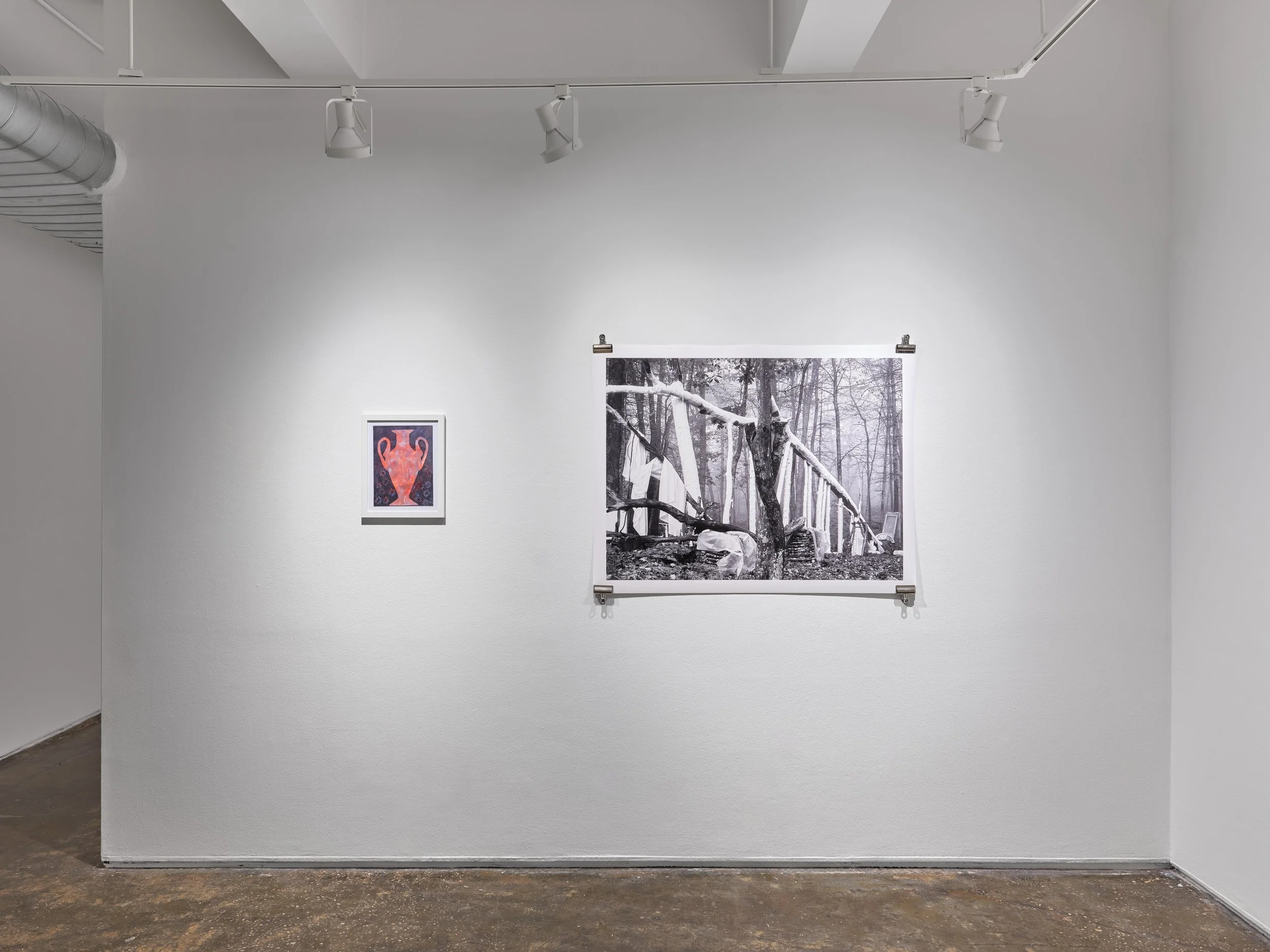
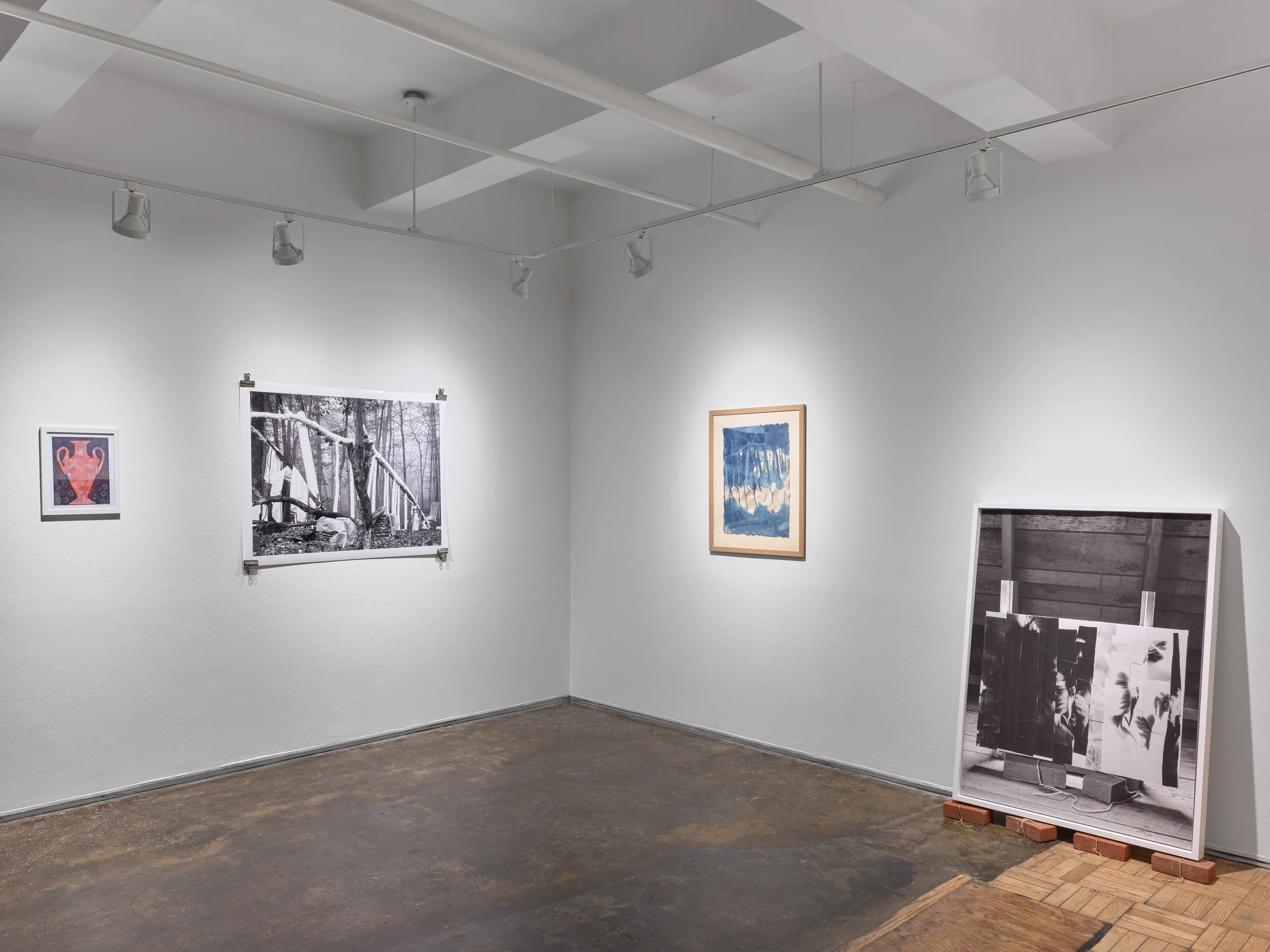
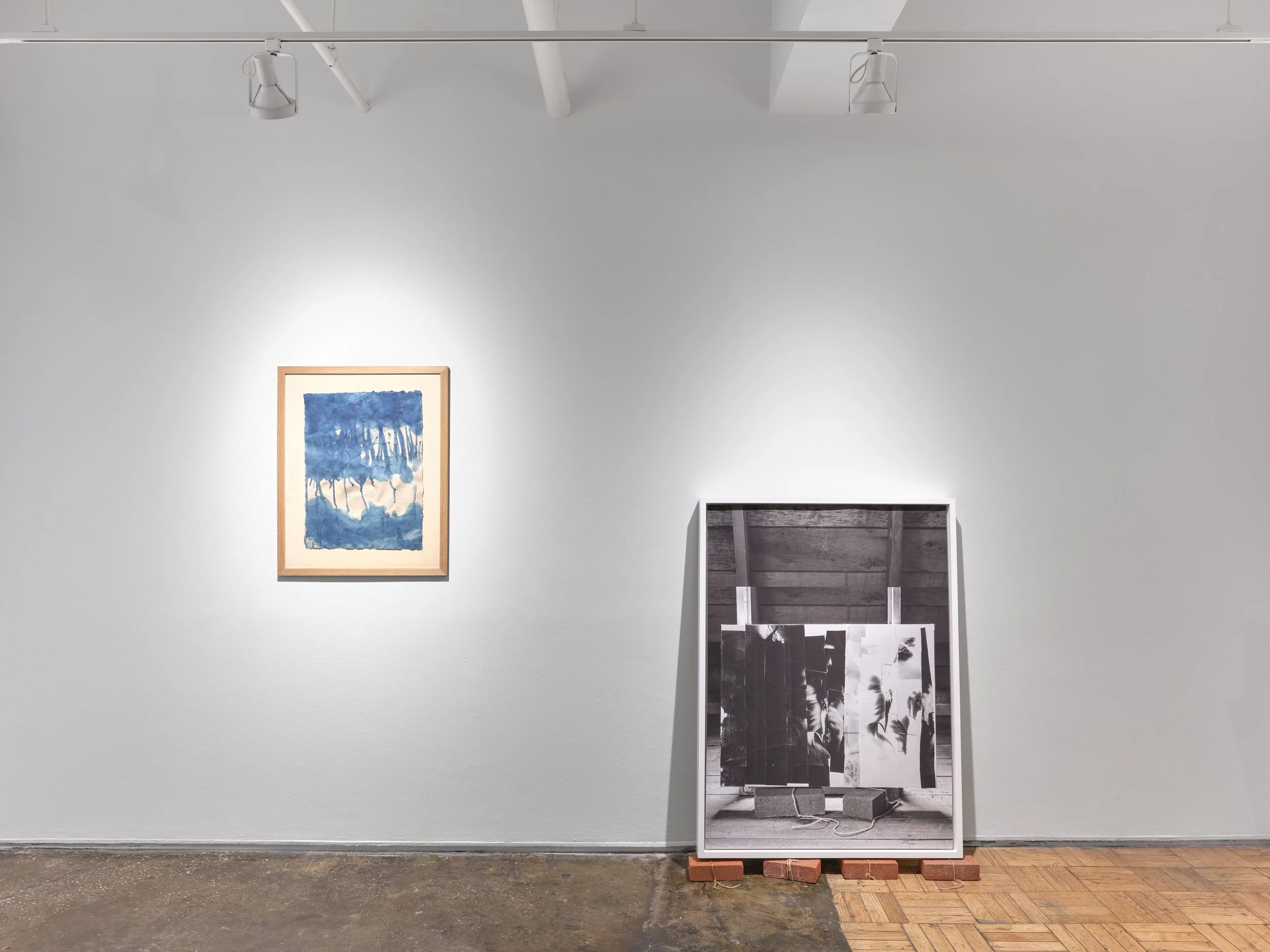
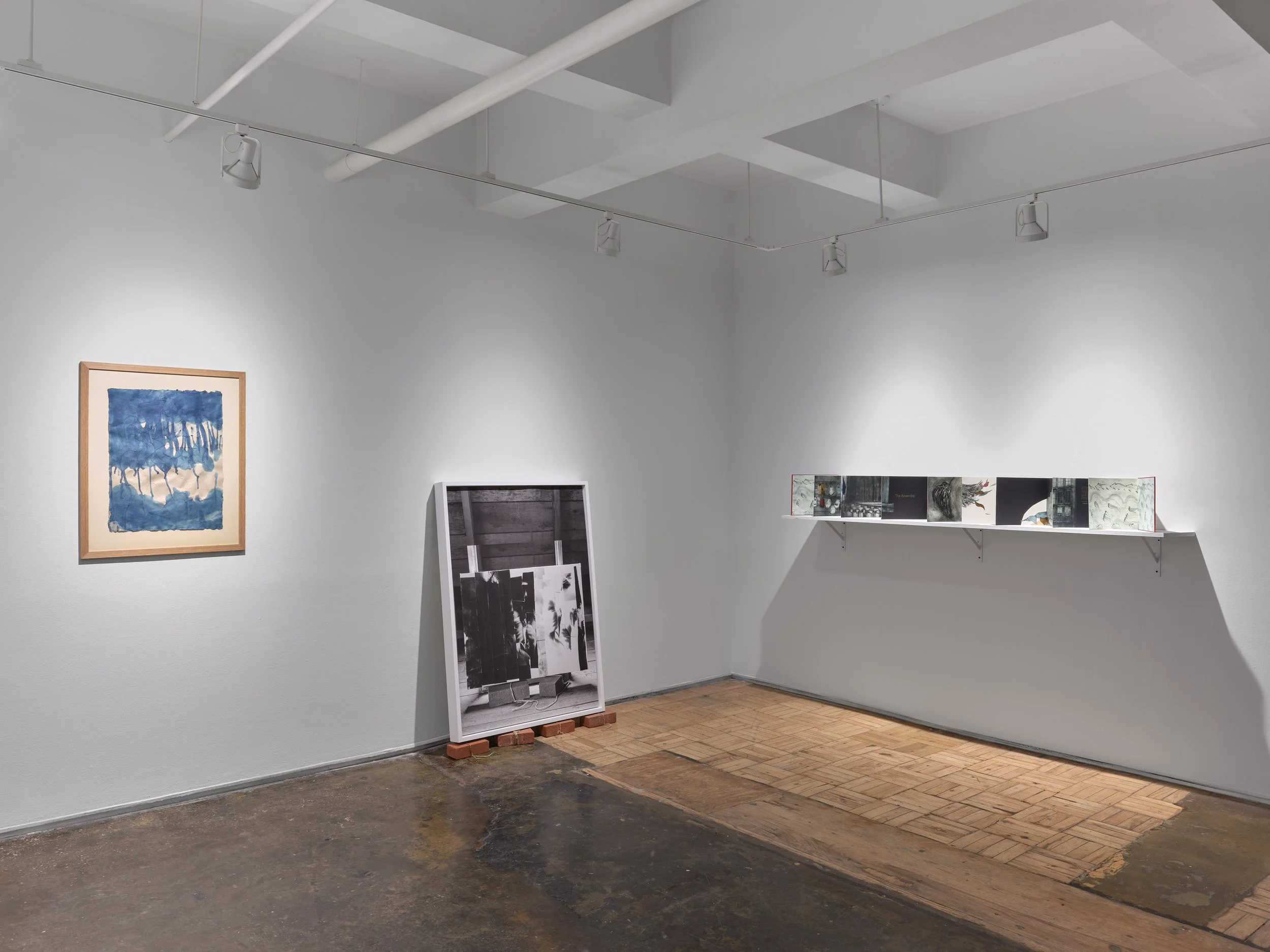
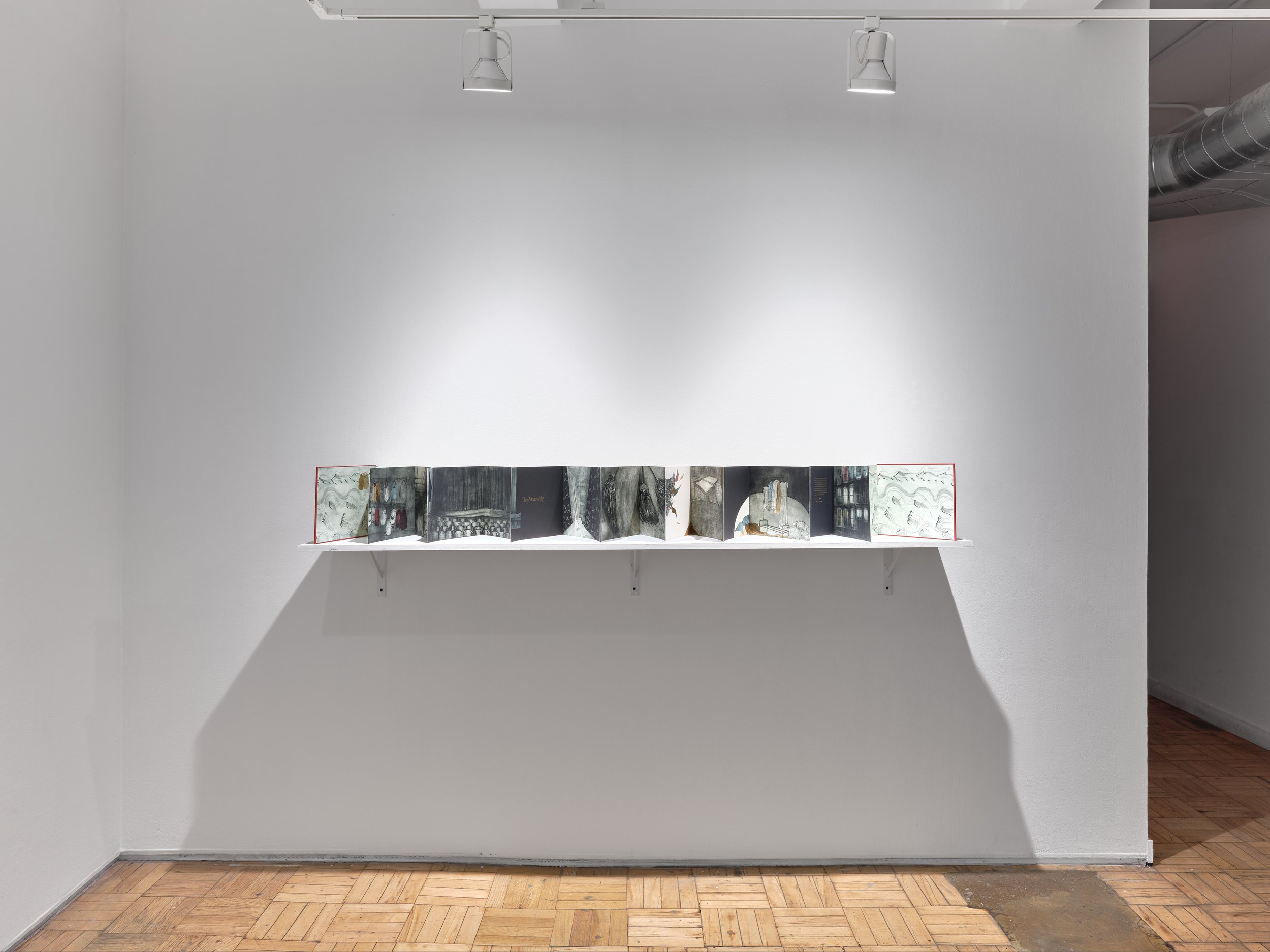
Mercury is the prime of mutability and universal spirit, symbolizing the fluid animacy of all matter. Liquid at room temperature, it flows to fill a given container and thus embodies change itself. In Gallery III, Robin Dintiman’s photograph Ghost Tree in Fog documents a transformation-in-progress: a private performance in which the artist draped a felled oak tree in spectral cloth and surrounded it with various reclaimed materials which conjure the shape of absent architectures. At the same time, the image’s ambiguity renders it open to a number of interpretations—a spine or ribcage, an asymptote trailing out of frame. untitled (summer studio/winter studio v.2) by Cozette Russell also attends to temporality, change, and mediation. A self-portrait taken in the studio wavers through successive interventions including rephotographing, re-printing, and collaging. The framed print’s base of bricks and twine, repeated within the image itself, creates a tension between doubling and variation, marking subtle ontological shifts. With In the Shape of Us #2, Irja Bodén translates the forms and haptic surfaces of her ceramic sculptures into two dimensions. Reminiscent of an amphora’s archetypical shape, Bodén’s print superimposes patterns and textures onto the central form, as if it were a vessel that simultaneously contains and overflows. This porous quality is echoed in Nicolei Buendia Gupit’s Tethered (Undertide), which employs material transformation to recuperate histories of colonial extraction of human and natural resources in the Philippines. Through the laborious process of papermaking, Gupit transforms materials such as indigo and abaca fiber—two key exports of the colonial Philippine economy—into meditations on loss, family, and resilience. The Assembly, an intaglio-printed leporello by Carrie Scanga, meanders through the haunting, vacant rooms of a school: sites of surveillance as well as sociality and learning. The empty seats and abandoned backpacks hint at activity taking place just offstage.
Variously frictive and serendipitous, the groupings of artworks in this exhibition together reach toward a fuller understanding of our world, much like the alchemist’s salt, sulfur, and mercury combine into the world’s countless variations and manifestations, beings and becomings. Ultimately, both artists and alchemists are tasked with transformation—the harnessing of admixture, distillation, and synthesis in the pursuit of something new.
View the Press Release here.
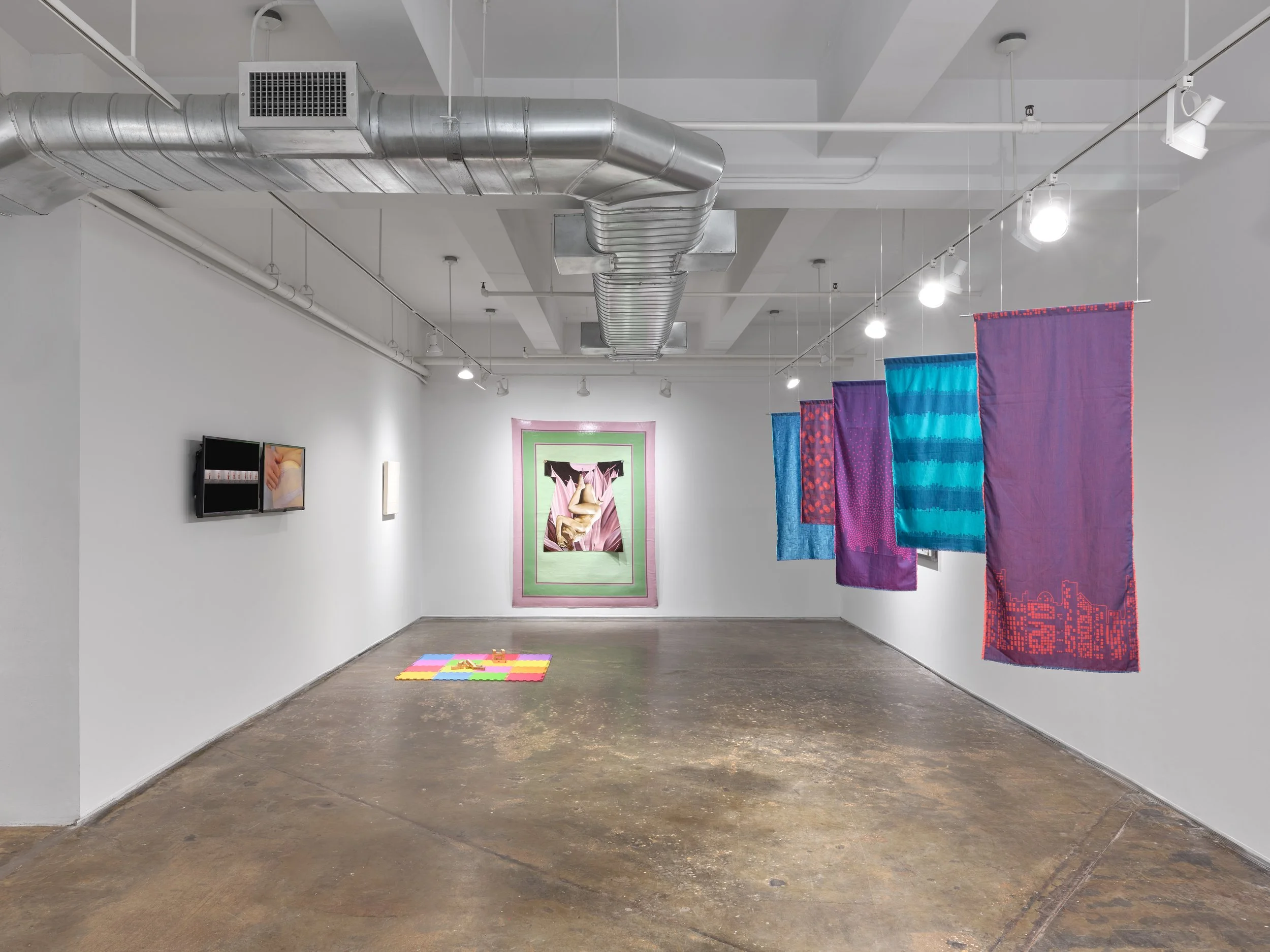
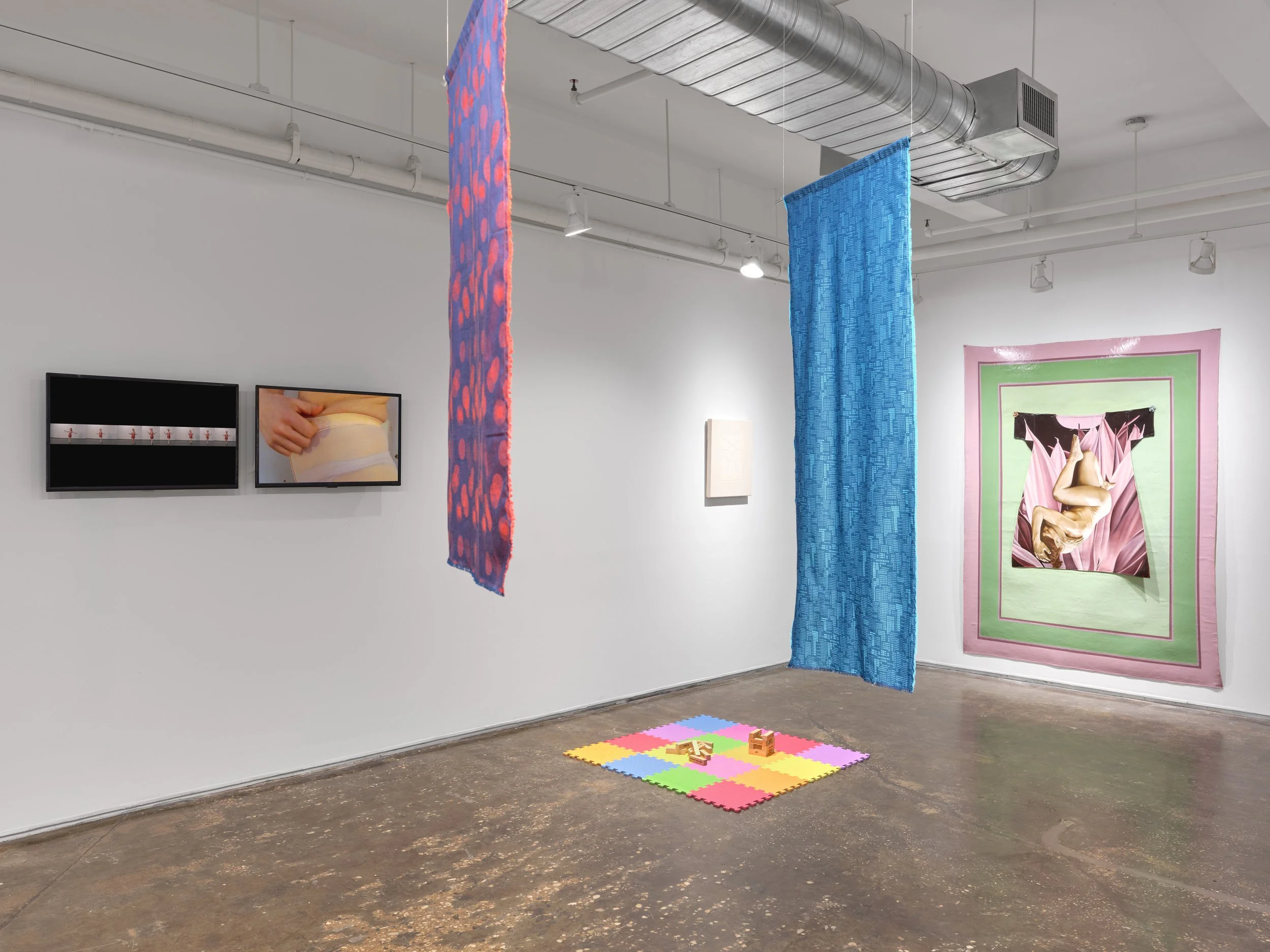
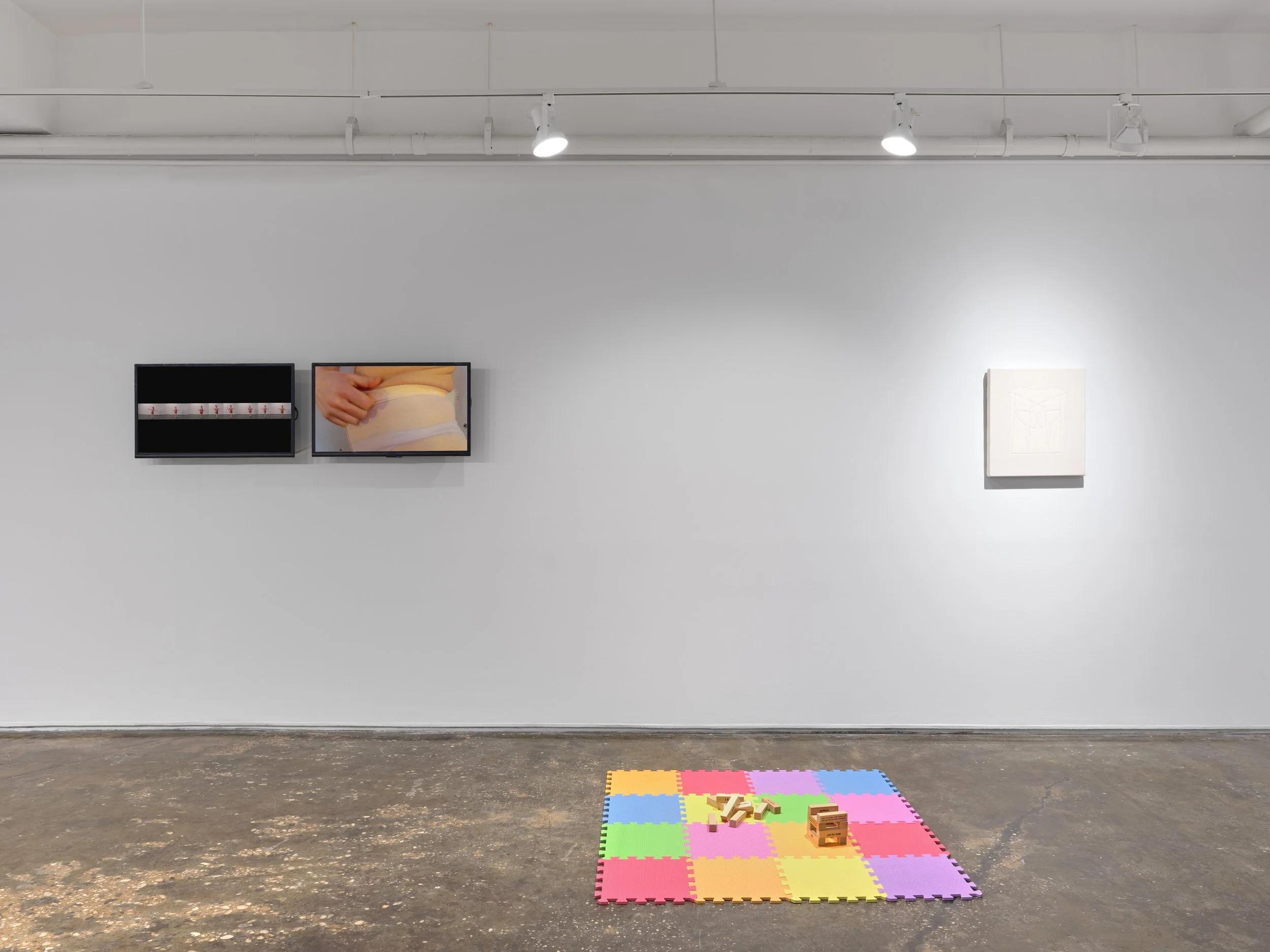
Photography by Matthew Sherman.